Rottweiler Care, Socialization, and Training: What the Evidence Actually Supports
A Rottweiler's temperament is built early and its skeleton is built slowly; get the timing of both wrong and you spend the next decade managing the consequences.

On this page
- My verdict, and why I don’t hedge on it
- What the breed standard actually asks of an owner
- The socialization window is shorter than owners expect
- Where the medical evidence changes my advice on spay and neuter timing
- Joints carry the other half of the risk
- A second dog, a different lesson
- Training that actually works with this temperament
- What I’d tell you if you asked me directly
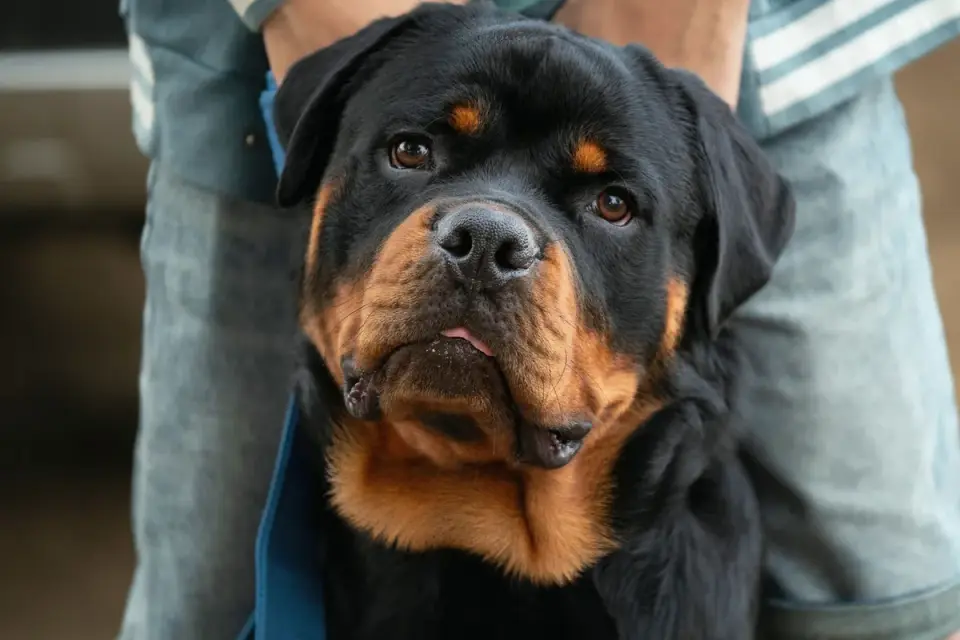
A breeder I consult with called me a few years back about a nine-week-old Rottweiler pup, sixty-one pounds already at the shoulder in her mind’s eye of where he was headed, and asked the question I hear from nearly every first-time Rottweiler owner: when do we start training, and what do we need to watch for? The pup, a stocky black-and-tan male named Otto, had already knocked over her coffee table twice by the time we spoke. His owners weren’t worried about obedience — they were worried about the dog he’d become at eighteen months, ninety-plus pounds, with a guarding instinct that’s bred into this breed on purpose. That’s the right worry. What they got wrong, like most new Rottweiler owners, was the timeline. They wanted to wait until he was “calmer” to start serious socialization. I told them the opposite was true: the window that matters most closes before he’s calm.
My verdict, and why I don’t hedge on it
Here’s where I land, and I’ll defend it: the single highest-leverage thing you can do with a Rottweiler is front-load structured socialization between eight and sixteen weeks, and separately, delay spay or neuter until skeletal maturity unless a specific medical reason argues otherwise. Those two decisions do more for a Rottweiler’s lifelong temperament and orthopedic health than any training method, diet, or supplement you’ll add later. The counterargument I take seriously is timing risk: waiting on surgery means a longer window of unwanted-litter risk and roaming behavior in an intact large-breed dog, and some shelters and pediatric-neuter advocates reasonably push back on delaying past six months for population-control reasons. I still land on delayed timing for this specific breed because the data on Rottweilers is unusually breed-specific and unusually stark.
What the breed standard actually asks of an owner
The American Kennel Club describes the Rottweiler as calm, confident, and courageous, with a self-assured aloofness that doesn’t lend itself to instant friendliness — the dog is built to assess situations, not to warm up on command. That temperament description matters clinically, because it means the “he’ll grow out of it” mindset owners apply to Labradors doesn’t map onto this breed. A Rottweiler that isn’t deliberately exposed to strangers, other dogs, handling, and novel environments during puppyhood tends to default toward wariness as an adult, not neutrality. The AKC also notes Rottweilers do best with two structured workouts a day and genuinely benefit from having a job — obedience, carting, tracking, or a similar outlet, not just a backyard.
The socialization window is shorter than owners expect
In my practice, the owners who come in around six or seven months asking why their Rottweiler suddenly seems suspicious of visitors almost always describe the same gap: a puppy who was social and easy at ten weeks, then spent the next four months mostly at home because they were waiting on the second or third vaccine round to “be safe.” I understand the instinct. But the primary socialization period in dogs runs roughly through sixteen weeks, and a lot of that window overlaps with incomplete vaccine series. The practical answer isn’t to skip socialization — it’s to do it carefully: controlled introductions to vaccinated, healthy dogs, carried exposure to public spaces rather than paws-on-the-ground in high-traffic areas, and structured contact with a wide range of people, including children, delivery workers, and people in hats or uniforms, since Rottweilers can generalize poorly from a narrow set of early experiences. A short sentence, because it’s worth sitting with: the temperament you see at two years old was mostly decided by four months.
Where the medical evidence changes my advice on spay and neuter timing
This is the part where I diverge from generic breed-guide advice, and I want to be specific about why. Rottweilers carry an elevated baseline risk of osteosarcoma, an aggressive bone cancer, compared with most breeds. A retrospective cohort analysis published via PMC examining large- and giant-breed dogs found that spaying or neutering before sexual maturity was associated with a substantially elevated osteosarcoma risk in breeds already predisposed to the disease, with sex hormones implicated in maintaining skeletal integrity during growth. That’s a mechanism, not a guarantee — plenty of early-neutered Rottweilers never develop bone cancer, and plenty of intact ones do. But when a breed already runs hot on a specific cancer risk, timing the surgery to let growth plates close, generally somewhere past twelve to eighteen months for a dog this size, is the more defensible default in my chair. The counterargument about unwanted litters and roaming is real; the fix is management — secure fencing, leash control, and a conversation with your vet about the specific tradeoffs for your household, not a reflexive six-month surgery date.
Joints carry the other half of the risk
Hip dysplasia is common enough in this breed that OFA’s hip dysplasia registry tracks it as a standing concern across large, fast-growing breeds, and Rottweiler-specific radiographic surveys have found dysplasia rates running well above what registry submissions alone suggest, since owners tend to submit normal-looking films more often than abnormal ones. Practically, this means controlling growth-phase nutrition (large-breed puppy formulas, not adult food scaled down, and not free-feeding a dog genetically wired to eat past satiety), limiting repetitive high-impact activity like jumping from height or forced long runs before the growth plates close, and keeping this dog lean for life. Body condition is the one variable an owner fully controls, and in a breed already carrying hip and joint risk, it’s not optional.
A second dog, a different lesson
I worked with a family a couple of years later whose Rottweiler, a female named Greta, was the opposite case — well-socialized as a pup, easygoing with people, but the owners had let her spay happen at five months because that’s what their previous dog’s clinic had always scheduled by default. Greta never developed cancer, to be clear; I’m not building a cautionary tale out of an outcome, because one dog’s outcome isn’t evidence of anything. What that case taught me was about communication, not biology: nobody had ever told this family that Rottweilers specifically carry a different risk calculus than the Beagle they’d raised before. They’d made a reasonable default decision without breed-specific information. That’s the gap I try to close now with every new Rottweiler owner I see — not fear, just the specific numbers for the specific breed in front of me.
Training that actually works with this temperament
Rottweilers respond best to consistent, low-drama structure — clear rules applied the same way every time, not intensity or dominance-based handling, which tends to make an already confident, sometimes wary breed more defensive rather than more compliant. Positive-reinforcement obedience work, ideally in a class setting that doubles as controlled socialization, tends to outperform one-on-one training alone for this reason. Consider a foundation of obedience or structured sport work, along the lines the AKC describes, both for behavioral outlet and because a Rottweiler with a job is measurably easier to live with than one without. If you’re weighing this breed against others for a busy household, our guide to low-maintenance dog breeds is a useful contrast — Rottweilers are not that dog, and knowing that going in changes what training plan actually fits.
What I’d tell you if you asked me directly
Get the socialization done early and deliberately, on a schedule, not “when it feels safe.” Talk to your vet specifically about spay/neuter timing rather than defaulting to six months, because this breed’s risk profile is genuinely different from most of the dogs that timeline was built around. Keep the dog lean through the growth phase and for the rest of its life. And give it a job — this is a breed built for purposeful work, and a Rottweiler without one tends to invent its own, which owners rarely enjoy as much as obedience class.
For related context, read Border Collie vs Australian Shepherd: The Real Differences That Matter Long-Term.
Frequently asked questions
At what age should I have my Rottweiler spayed or neutered?
Talk with your veterinarian specifically about this breed. Because Rottweilers carry an elevated baseline osteosarcoma risk, many vets recommend waiting until skeletal maturity, roughly past 12 to 18 months, rather than defaulting to the standard six-month timeline used for lower-risk breeds.
When does Rottweiler socialization need to start?
The primary socialization window runs through about sixteen weeks of age. Controlled, careful exposure to people, dogs, and environments during this period — balanced against incomplete vaccine protection — has an outsized effect on adult temperament.
How common is hip dysplasia in Rottweilers?
It's a well-documented concern in the breed. Registry submissions likely undercount true prevalence since owners more often submit normal-looking films, so lean body condition and controlled growth-phase exercise matter regardless of the exact number.
Sources
- Rottweiler Dog Breed Information — American Kennel Club
- Dog breeds and body conformations with predisposition to osteosarcoma: a case-control study — PMC (National Center for Biotechnology Information)
- Hip Dysplasia — OFA