Best Low-Maintenance Dog Breeds for Busy People
The dog that never sheds still might walk you ragged, and the dog that never wants a run still might need a groomer every six weeks — pick the wrong axis and you'll be disappointed by month three.
On this page
A woman I saw for a wellness exam last spring had adopted a nine-month-old Vizsla off a friend’s recommendation — “low maintenance,” the friend had promised, because the coat needed almost no brushing. She hadn’t asked about exercise. Six weeks in, she was walking the dog three times a day and still coming home to a torn-up doormat. The coat was exactly as easy as advertised. Everything else about that dog was a full-time job.
That’s the trap. “Low maintenance” isn’t one trait. It’s at least three — coat care, exercise need, and behavioral effort — and a dog can score low on one axis while running high on another. Before you shop for a breed, decide which kind of low-effort you actually need.
What does “low maintenance” mean, medically and behaviorally?
Coat maintenance is the most visible axis and the one people default to. Short, single coats — the kind found on American Kennel Club: Boxers, Vizslas, and Great Danes as described by the AKC — need little beyond weekly brushing and an occasional bath. Double coats and long, silky coats are a different commitment entirely, regardless of how calm the dog’s temperament is.
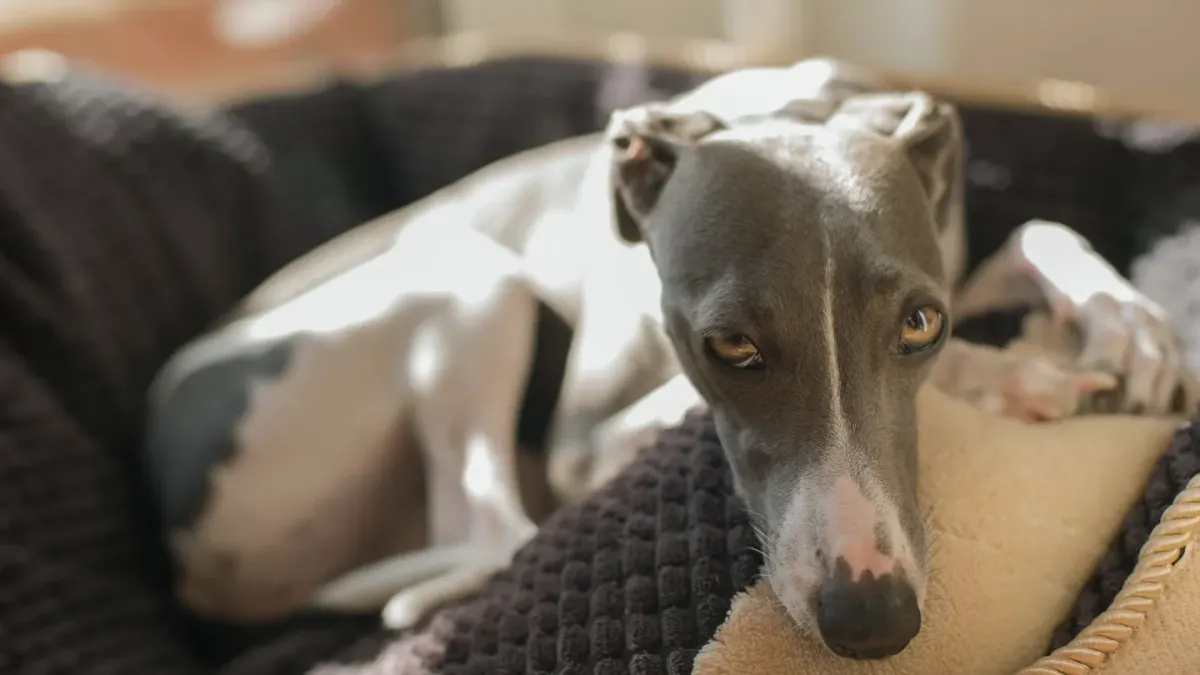
Exercise need is the second axis, and it’s the one owners most often get wrong, because a dog’s build doesn’t always predict its actual daily requirement. Take the Greyhound. It looks built for constant motion, but it’s a sprinter, not an endurance animal — most adult Greyhounds, including retired racers, do well on a daily walk plus a few short sprint sessions, not hours of exercise.
The third axis — behavioral effort — is the one clinical experience weighs most heavily, and it’s the one that gets left off the checklist entirely.
Why do coat-easy breeds still wear owners out?
In my practice I’ve watched this exact mismatch play out more than once. A retired couple adopted an eight-year-old Boxer mix from a shelter specifically because the short coat meant no grooming appointments. What they hadn’t planned for was a dog with a stiff, hesitant gait after rest — noticeable within the first two weeks, worse on the cold tile of their kitchen in the mornings. The coat cost them nothing. The joints cost them a mobility workup, a weight-management conversation, and a slower walking routine than they’d budgeted for. Low grooming and low physical upkeep are not the same promise, and I tell every client evaluating an older or large-breed dog to ask about both before they commit, not after.
That’s also where breed size matters more than people expect. Great Danes are often called couch potatoes, and the label is largely earned — short walks and light activity suit most adults well. But their size still means joint monitoring matters more, not less, as they age, and a coat that needs almost nothing still sits on a frame that does.
What’s the honest tradeoff on temperament?

Here’s the counterargument worth naming directly: some owners will tell you low exercise and low coat care are enough, and for a genuinely quiet household, they might be right. I don’t fully agree. A dog that’s under-stimulated mentally — even one that needs almost no walking and almost no brushing — can still develop the anxious, repetitive, or attention-seeking behaviors that bring people into my exam room asking what’s “wrong” with an otherwise healthy dog. Breeds like Pugs and Chihuahuas score low on coat and exercise effort but still need consistent, low-stress handling and some daily engagement to stay behaviorally settled. If you skip that third axis, you haven’t actually found a low-maintenance dog. You’ve found a dog whose maintenance shows up somewhere you weren’t watching for it.
Where I land, and where I’d push back on a client who disagreed: prioritize temperament fit and realistic exercise tolerance first, coat second. A short coat is a grooming convenience. A mismatched temperament or exercise need is a daily, years-long friction point, and it’s the one that actually determines whether the relationship holds up.
How do I match a breed to my actual schedule?
Ask three separate questions instead of one. First, how much brushing and bathing can I realistically commit to weekly — smooth-coated breeds like French Bulldogs and Dachshunds need only occasional attention here. Second, how much daily physical activity does this specific dog, at this age and health status, actually require — not what the breed’s reputation implies. Third, how much behavioral engagement and low-stress handling will this dog need to stay settled, especially as a puppy or in a new home.
I once worked with a family who’d done exactly this kind of homework before adopting a five-year-old Greyhound from a rescue. They picked her for the honest reason: retired racers are often calm indoors and need only moderate daily exercise, which matched their two-working-parent schedule better than a high-drive herding breed would have. What surprised them wasn’t the exercise — it was how much settling-in support she needed those first few months, thin coat and cold sensitivity included. They adjusted her routine, not her breed. That’s usually the right order of operations.
If joint comfort becomes part of your dog’s maintenance picture as they age — which happens across breeds, not just large ones — it’s worth understanding what actually helps and what’s still unproven; our evidence-led review of longevity supplements for seniors and our look at whether hyaluronic acid actually works for joints both stay honest about the current research, not the marketing.
The short version
A genuinely low-maintenance dog is a match on all three axes — coat, exercise, and temperament — not just the one that’s easiest to spot in a listing photo. Match the dog to your actual week, not the breed’s reputation, and budget honestly for the axis you’re weakest on, whether that’s time, patience, or a fenced yard.
Frequently asked questions
Are small dog breeds automatically low maintenance?
Not necessarily. Size affects exercise space needs, but coat type and temperament vary widely within small breeds — a long-coated toy breed can need more grooming than a short-coated large breed.
Do low-energy breeds still need daily exercise?
Yes. Even breeds with modest exercise requirements, like Greyhounds, benefit from a daily walk plus some structured activity to support joint and behavioral health.
What's the most commonly overlooked "maintenance" cost in a dog?
Behavioral and mental engagement. A dog can need almost no grooming and little exercise but still develop anxious or repetitive behaviors without consistent, low-stress handling.
Sources
- Dog Breeds With Minimal Grooming Needs — American Kennel Club