On this page
A Cavalier King Charles Spaniel came into my exam room a few years ago with a client who’d just started a new antidepressant and wanted a dog “that would just sit with her.” The dog she’d already adopted, a rescue Australian Cattle Dog mix, paced the exam room the entire visit, panted despite the cool temperature, and could not settle even after I dimmed the lights and let them wait in the car instead of the lobby. That mismatch — a high-arousal working breed asked to function as a calming presence — is one of the most common things I see, and it’s rarely the dog’s fault.
My verdict, stated plainly: for most people asking about anxiety and emotional support, I steer them toward breeds selected historically for low reactivity and human-focused temperament — Cavalier King Charles Spaniels, Golden Retrievers, Labrador Retrievers, Greyhounds, and Bichon Frises come up most often in my practice — while flagging that individual variation within any breed is large enough that temperament testing the actual dog still matters more than the label on its paperwork.
What “good with anxiety” actually means physiologically
Before naming a single breed, it’s worth being precise about the biology, because “calm dog” is doing a lot of work in most articles on this topic. A dog that helps a person with anxiety needs three things: a low resting arousal baseline, fast physiological recovery after a stressor, and a strong affiliative pull toward its person rather than toward the environment. These are measurable. A 2019 study published in PLOS One found that dogs’ cortisol reactivity and recovery after a standardized stress test correlated with specific behavioral traits — dogs with high initial reactivity but poor recovery tended to show more problematic behavior, while dogs that mounted an adaptive stress response and then settled quickly were rated as more behaviorally sound. That recovery curve — spike, then settle — is closer to what I’m actually looking for than “never gets stressed,” which isn’t realistic for any dog.
Genetics load the dice on where a dog sits on that curve. A large-scale study of over 13,700 Finnish pet dogs, published in Scientific Reports, found that anxiety-related traits — noise sensitivity, fear of strangers, fear of novel situations — showed substantial breed differences, with the authors concluding the pattern suggests a strong genetic contribution rather than pure environment or training history. Noise sensitivity alone showed up in roughly a third of the dogs studied, and it clustered heavily by breed. That’s the piece I wish more people understood before choosing a dog specifically to help them cope with their own anxiety: you are, in effect, choosing a genetic starting point, not a blank slate.
The breeds I actually recommend, and why
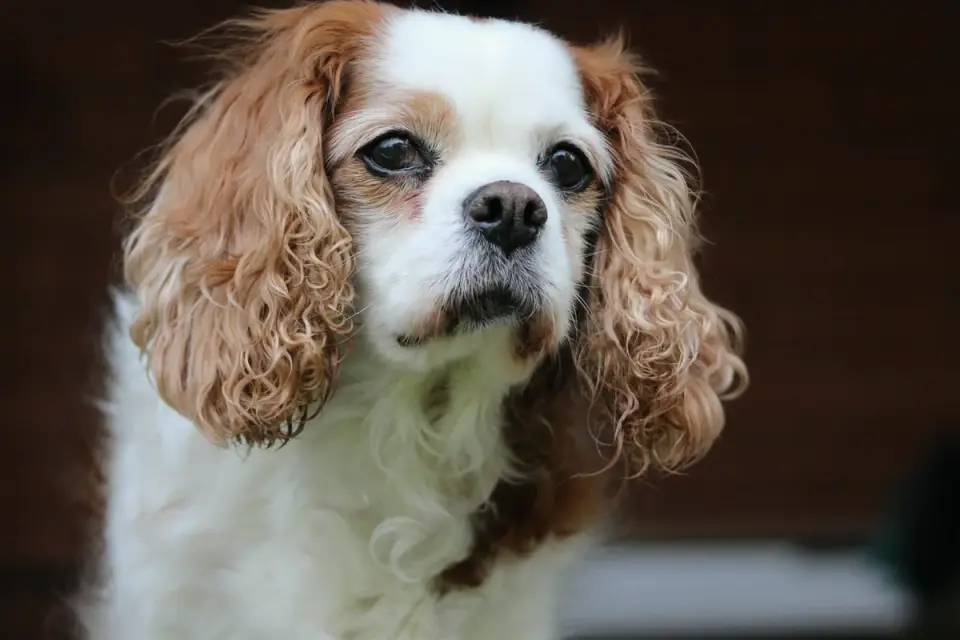
Cavalier King Charles Spaniels were bred for one job across hundreds of years: sit in a lap and be pleasant company. That selection pressure shows up as a genuinely low baseline arousal and a strong, almost velcro-like orientation toward their person. The tradeoff — and I tell every client this up front — is a well-documented predisposition to mitral valve disease and syringomyelia, so this is not a breed I recommend without a cardiac workup plan already in mind.
Golden and Labrador Retrievers show up on nearly every list for a reason that’s more than marketing: they were bred for cooperative work alongside humans, not independent decision-making, which tends to produce dogs that check in rather than escalate on their own. They’re also the backbone of most formal service and therapy dog programs, which is not an accident of popularity — AAHA’s assistance dog guidelines note that structured behavioral evaluation, not breed alone, determines suitability, but breed still shapes the odds going in.
Greyhounds surprise people. They look like they’d be high-strung, but retired racing Greyhounds are frequently described by rescue groups and behaviorists as remarkably low-energy, quiet housemates once off the track — the running is explosive and brief, not a constant hum of anxiety-adjacent energy.
Bichon Frises and other small companion breeds were, like the Cavalier, purpose-bred for close human contact rather than a working job. That heritage tends to produce dogs comfortable with prolonged physical closeness, which matters more than people expect — a dog that finds lap contact aversive is a poor fit no matter how “friendly” it tests on a temperament checklist in a shelter lobby.
Where I push back on the popular lists
Most “best breeds for anxiety” lists include Border Collies and German Shepherds because they’re intelligent and trainable. In my practice, I actively steer people away from these choices when the goal is a calming presence rather than a project dog. High working drive and high anxiety-support suitability are not the same trait, and conflating them sets owners up to fail. A NCBI: genetic study of canine fear and aggression found that variation in fear and aggression traits predates modern breed formation and is shared across breeds — meaning even a breed with a calm reputation can produce individual dogs with real reactivity, and a breed with a “nervous” reputation can produce individual dogs that are rock-solid. I’ve placed that caveat in front of enough clients that I say it almost reflexively now: meet the individual dog before you commit to the breed stereotype.
One of the families I worked with had done exactly the right homework — they’d researched Cavaliers extensively and picked a breeder with cardiac clearances — and adopted an eight-week-old puppy named Wallace specifically to help their teenage son manage panic attacks related to a new school transition. What struck me at the six-month visit wasn’t that Wallace never got excited; he did, normally, at the door and around other dogs. What mattered was that within about ninety seconds of the door closing, he’d drop to the floor near the son’s feet and stay there, panting slowing, body loose rather than braced. That recovery speed — not the absence of arousal — was the thing actually helping in the moment his owner needed him to.
What I tell owners considering a breed for this reason
If you’re choosing a dog specifically to support your own anxiety, I’d rather you weight breed as one input among several rather than the whole decision. Ask about the individual puppy’s or adult dog’s recovery time after mild startle — most reputable breeders and shelters can show you this in a five-minute interaction. Meet parents when possible; temperament in the sire and dam is a reasonable predictor. And build in a real trial period, because even a Cavalier or a Golden can turn out to be the exception that doesn’t fit the pattern.
For readers weighing a specific size or lifestyle constraint alongside the anxiety question, our guide to best low-maintenance dog breeds for busy people and our breakdown of Cavalier King Charles Spaniel vs Cocker Spaniel health tradeoffs both cover ground that overlaps meaningfully with this decision. If you’re torn between a working-line breed and a companion breed, our Border Collie vs Australian Shepherd comparison is a useful gut check on how much exercise-driven arousal you’re actually signing up for.
The short version, brief recap: pick for baseline arousal and recovery speed, not coat color or breed prestige. Cavaliers, Golden and Labrador Retrievers, Greyhounds, and Bichon Frises earn their reputation honestly, but the individual dog in front of you still matters more than the breed on paper — meet it, watch it recover from a startle, and trust that data point over the list.
Frequently asked questions
Are hypoallergenic breeds better for anxiety support?
Not inherently — coat type has no established link to temperament or arousal recovery. Choose based on behavioral fit first, then screen for allergy compatibility separately.
Can a mixed-breed dog be just as good for emotional support as a purebred?
Yes. Breed shifts the odds, but individual temperament testing matters more than pedigree, especially since fear and reactivity traits vary widely within any breed.
Do small breeds make better emotional support dogs than large breeds?
Size isn't the deciding factor. What matters is baseline arousal and how quickly the dog settles after excitement or a startle, which shows up across both small and large breeds.
Sources
- Physiological stress reactivity and recovery related to behavioral traits in dogs (Canis familiaris) — PLOS One
- Prevalence, comorbidity, and breed differences in canine anxiety in 13,700 Finnish pet dogs — Scientific Reports
- Genetic mapping of canine fear and aggression — NCBI
- Assistance Dogs: Emotional Support — AAHA