On this page
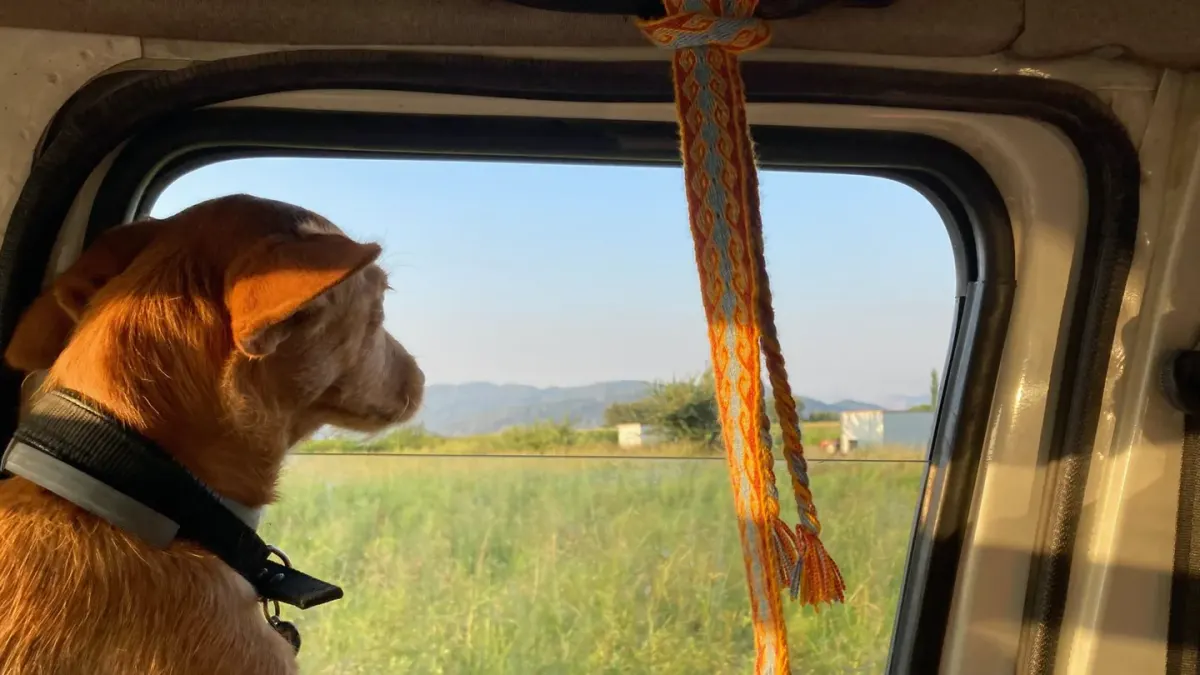
The 10 is twenty minutes late, the platform is crowded, and your four-year-old, 48-pound cattle mix has started that thin, rising whine every time the brakes squeal two tracks over. You have treats, you have a chew, you have a neighbor pretending not to stare. By the second stop she is panting with her ears pinned, ignoring the chicken you brought, and shifting her weight from paw to paw in the footwell. This is the decision point I counsel owners to expect: whining on a train is rarely disobedience, and it rarely resolves if you simply wait it out. In my exam room I frame it as a stress signal first, then we change the environment around the dog.
My position is simple. For most whining on trains, lower the sensory load and give the dog a job to do before you consider calming supplements, wraps, or correction. That means distance from aisle traffic, a familiar mat that smells like home, muffled vibration under the carrier, and calm reinforcement for quiet moments — not scolding the noise away. The strongest counterargument is that whining works, so you should ignore it completely to avoid rewarding it. Extinction alone sounds tidy, yet on a moving train a highly aroused dog is not learning; cortisol and motion make the brain less flexible, a point behavior specialists at AVSAB emphasize when they advise against punishment-based approaches for fear and anxiety.
Read the whine before you fix it
Not all whines mean the same thing. A bored adolescent may whine-sharp, glance at you, then offer a play bow. An anxious traveler goes softer and more rhythmic, paired with lip licking, yawning, drooling, tucked tail, or scanning the doors. Motion discomfort tends to cluster around curves and braking, with swallowing, drool, or restlessness that fades once the train steadies.
Watch for thirty to sixty seconds before you act. Note what changed just before the sound started: a suitcase rolling past, the intercom crackle, a sudden stop. Welfare guidance from RSPCA makes the same distinction I make with clients — secure, familiar setup and breaks in stimulation matter more than any single cue or command.
That pause gives you a baseline. Without it, owners tend to stack interventions and never learn what actually helped.
Make the footwell smaller and quieter
Trains are hard because the dog cannot control proximity, sound, or movement. Your job is to shrink their world.
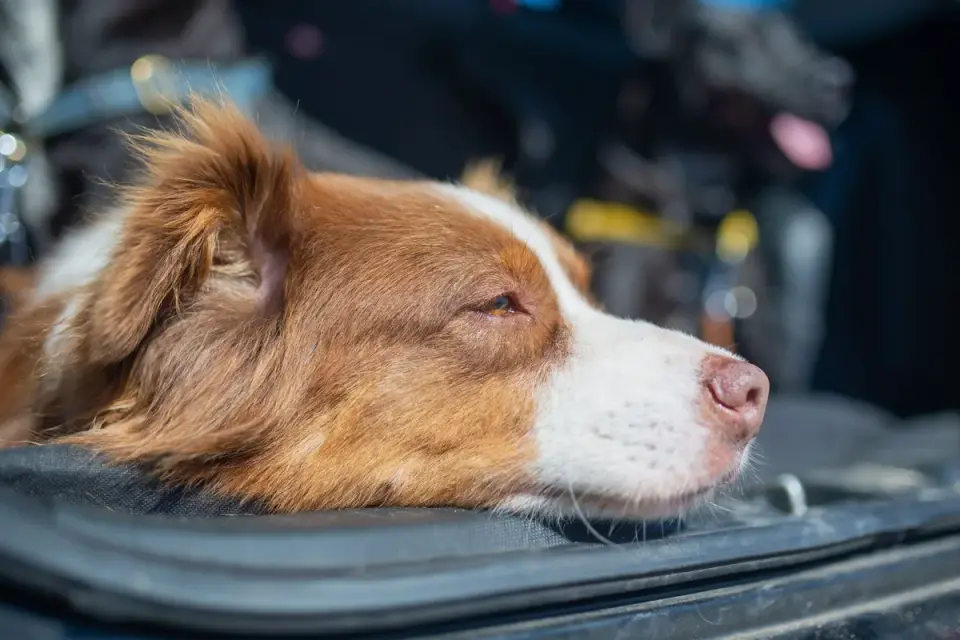
Slide the carrier or mat tight against your legs and away from the aisle, drape a light blanket over two sides to cut visual flicker, and place a folded towel underneath to dampen vibration. Keep the leash short but loose, clipped to a harness rather than a collar. Offer water at stations rather than while swaying down the aisle.
Then give the mouth and nose something predictable. A long-lasting chew, a snuffle pouch with three or four kibbles, or a lick mat applied before boarding can support calmer behavior during travel, especially if you have practiced the same routine at home. If your dog already travels well by air, the same carrier conditioning from How to Fly With a Dog: The Complete Guide applies here — familiar bedding plus short, rewarded settle sessions beats novelty every time.
Reward the gaps. When she sighs, lies on her side, or goes quiet for five seconds, mark it softly and deliver a tiny treat low, between her paws. You are not rewarding whining. You are paying for the choice to settle.
The trap I see when ignoring feels kinder
Three weeks in, one owner told me she had tried to do everything right on her commuter line. Her six-year-old, 32-pound spaniel whined from departure to arrival, and a well-meaning friend advised total non-response so the behavior would extinguish. For nine rides she stared out the window while he escalated — whine to bark to pawing at the carrier zipper, then drooling through the mesh by day 10. She felt guilty for ignoring him and frustrated that the whining was louder, not better.
This is the tradeoff with extinction alone in a confined public space. Without lowering arousal first, the dog practices louder behavior and pairs the train with frustration. Behavior references in the Merck Veterinary Manual describe why that cycle persists: anxiety-driven vocalization tends to intensify when the underlying emotional state stays unaddressed.
We changed the plan. She moved to a less crowded car, added a non-slip mat and covered crate, and started rewarding three-second silences rather than waiting for a perfect down-stay. The whining did not vanish. It shortened.
When whining is motion sickness or age
Here is the edge case that changes my advice. An 11-year-old, 61-pound Labrador boarded beautifully for years, then began whining twenty minutes into every rail trip, followed by heavy swallowing and a single episode of vomiting on a curved section. The owner assumed anxiety and added more enrichment, which meant more food on a nauseated stomach. On exam the dog had early vestibular sensitivity and stiff hips that made bracing against sway painful.
Older dogs whine differently. Watch for drool without lip licking, repeated yawning that looks effortful, reluctance to lie down, or stiffness when the train rocks. For these dogs, enrichment is not the answer. Ask your veterinarian about motion-related nausea and joint comfort before the next trip, travel at cooler, less crowded times, and choose a seat where the dog can lean against a solid wall rather than slide.
Prevention still helps younger brains cope. Short mat-settle practices and nosework games at home, like the calm mental-load ideas in A Simple Weekly Enrichment Plan for Dogs, Built Around the Aging Brain, may help support frustration tolerance long before you board.
Plan your exit, too. If whining tips into open-mouth panting that will not break, trembling, barking that disturbs the car, or repeated attempts to bolt, detrain at the next station if you safely can. A reset on the platform protects both welfare and learning.
You will ride again.
Frequently asked questions
Should I scold my dog for whining on a train?
No. Scolding tends to raise arousal and can increase anxiety-linked vocalization. Lower stimulation first — cover, cushioning, distance from traffic — then quietly reward brief moments of calm.
Can I give a calming chew or supplement before boarding?
Talk with your veterinarian first, especially for senior dogs or dogs on medication. Supplements do not replace setup and training, and sedatives that limit mobility can make train travel riskier.
When should I skip the train and call my vet?
If whining comes with vomiting, heavy drool, trembling that will not settle, aggression, or collapse, detrain when safe and seek veterinary advice. Sudden behavior change in an older dog deserves a medical check before the next trip.
Sources
- Position Statements — AVSAB
- Behavioral Problems of Dogs — Merck Veterinary Manual