What Is a Lick Mat Used For? An Evidence-Bounded Look at Slow Feeding and Distraction
A lick mat is a legitimate slow-feeding and distraction tool for dogs — it is not, on current evidence, a proven anxiety treatment.
On this page
It was a nine-year-old Cavalier King Charles Spaniel named Wally who first made me pay real attention to lick mats as a clinical tool rather than a novelty item. Wally’s owner brought him in for a wellness recheck and mentioned, almost as an aside, that groomer visits had gone from a wrestling match to something closer to routine. Her fix wasn’t a supplement or a training program — it was a silicone mat smeared with plain canned pumpkin, stuck to the tile with water, set down thirty seconds before the dryer started. Wally, a dog who used to plant his feet and shake through the whole appointment, now had somewhere to put his attention. Nothing about his underlying anxiety diagnosis changed. What changed was that he had a job to do with his mouth for the four or five minutes that mattered most.
What is a lick mat actually built to do?
A lick mat is a textured silicone or rubber pad — usually with raised ridges, suction cups, or shallow wells — designed to hold a thin layer of food and force a dog to lick it off in small amounts rather than bite and swallow. That mechanical detail is the whole product. It is not a supplement, a training tool, or a treatment; it is a delivery surface that changes how fast a dog can eat something.
Two uses are well supported by how the object works, and one popular claim is not.
Slow feeding. The grooves and suction texture physically prevent the gulping that fast eaters default to, which is the same principle behind slow-feeder bowls and puzzle feeders. For a dog who inhales meals, Rover and other reviewers note this can reduce the odds of a dog eating so quickly it regurgitates its dinner. That’s a mechanical, observable effect, not a hormonal one.
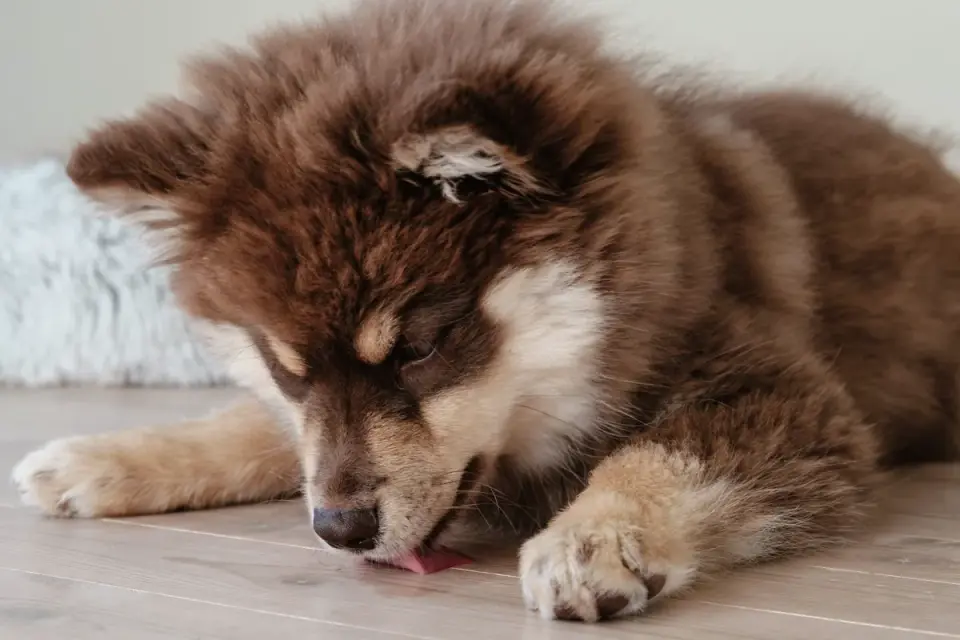
Distraction during a discrete stressful event. Grooming, nail trims, bath time, car rides, and thunderstorms are short, bounded stressors, and a lick mat gives a dog something absorbing to do with its mouth and attention during that window. This is the use case even skeptical veterinarians endorse — Walkerville Vet explicitly confirms lick mats help with “entertainment & distraction” and cites bathing, grooming, vet visits, and fireworks as reasonable situations to deploy one.
General anxiety reduction — the claim I don’t think the evidence supports yet. Marketing copy for lick mats routinely states that extended licking releases a “calming hormone” that lowers a dog’s baseline anxiety. Walkerville Vet pushes back on this directly, noting there is “no evidence for anxiety reduction” and warning owners not to mistake a busy dog for a calm one. I land in the same place. A dog occupied by a task can look settled without its underlying stress physiology having moved at all — and for a dog with a genuine anxiety disorder, distraction during one stressful event is not treatment for the disorder itself. If a dog’s anxiety shows up daily, in multiple contexts, and isn’t resolving with environmental tools, that dog needs a behavior work-up, not a mat.
Where I draw the line as a nutritionist, not just a behaviorist
In my practice I get asked constantly whether a lick mat “counts” as enrichment or whether it’s just a gimmick, and my answer depends entirely on what the owner is trying to fix. If the goal is slowing a fast eater down or giving a dog something to focus on for the five minutes a nail trim takes, a lick mat does that job at low cost and low complexity. If the goal is treating chronic separation anxiety, noise phobia, or generalized anxiety, I tell owners plainly that a lick mat is not doing the work they think it’s doing — it’s a bridge, not a fix. The same discipline applies to any supplement I recommend for cellular aging or joint support: I have to weigh what the tool can realistically do for a dog’s diet, mobility, or recovery against what the label promises, and a lick mat’s job description is narrow by design. One border collie I worked with, a compulsive spinner in the exam room whose owner had tried a lick mat as a first-line anxiety fix, needed an actual behavior consult and, eventually, medication — the mat had been masking the pattern in the waiting room, not resolving it.
That distinction matters for a related reason: what’s actually going onto the mat. Because a lick mat is a food-delivery surface, whatever you smear on it is a diet decision, not a neutral prop. Plain canned pumpkin, unsweetened yogurt, or a thin layer of a dog-safe food is fine. Owners sometimes reach for whatever is in the pantry, and that’s where ingredient literacy matters — some kitchen staples that seem harmless are genuinely dangerous. Are Onions Toxic to Dogs? Yes — Here’s the Biology Behind the Warning walks through exactly why onion and its relatives never belong on a mat, and Can Dogs Eat Bananas? What the Fruit Actually Does for a Dog’s Gut is a useful reference for safer, lower-risk mat fillings for dogs who tolerate them.
Calorie load and supervision are the two practical failure points
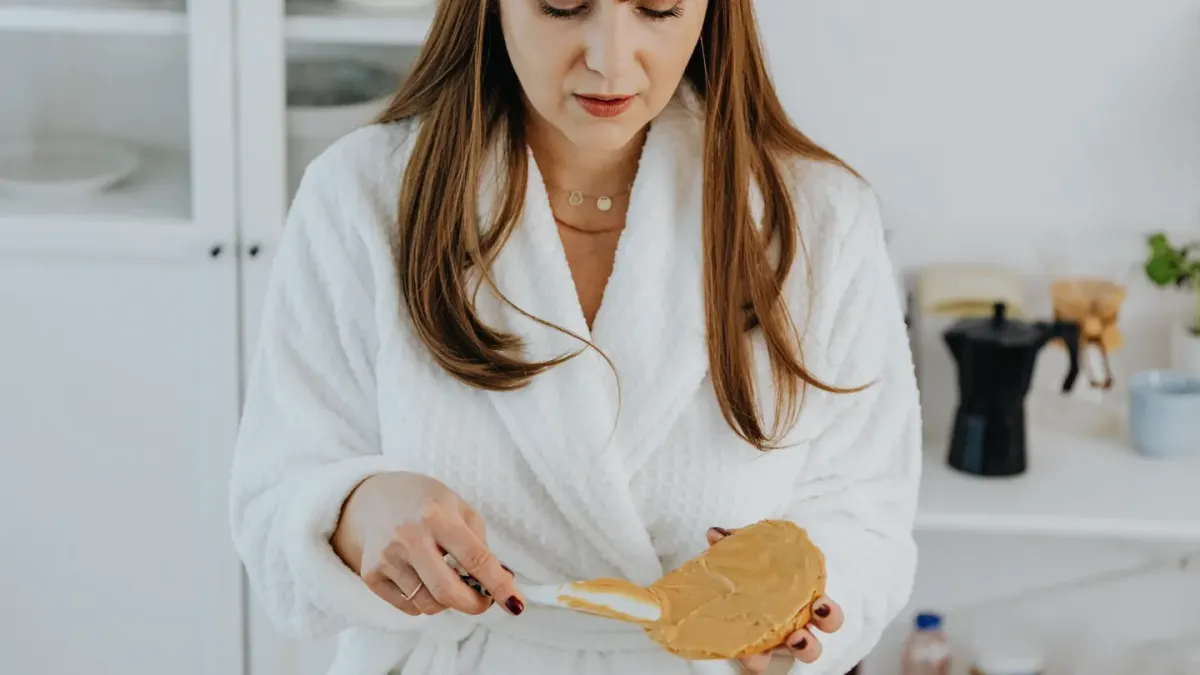
Lick mats are frequently used with calorie-dense spreads — peanut butter, cream cheese, canned dog food — and every lick is a calorie an owner may not be tracking against the day’s total. For a senior dog managing weight or a dog on a therapeutic diet, that matters more than most owners expect. If you’re using a mat daily, subtract its calories from the meal it’s replacing or supplementing, the same way you would treat any training treat.
Supervision is the safety issue that actually sends dogs to the clinic. Walkerville Vet describes two recent cases involving intestinal obstruction tied to lick mat use — one dog that swallowed pieces of the mat itself, and a cat that required surgery — and states plainly that no dog should be left alone with a lick mat, even a well-trained one, because chewing behavior under it is unpredictable. I’d add one more caution specific to older dogs: a dog with reduced mobility or early cognitive change can struggle to keep a mat pinned down, so wetting it and pressing it firmly to a flat surface, or using a mat with a suction base, isn’t optional — it’s the difference between a calm five minutes and a mat sliding across the floor mid-groom.
The owners I see most often aren’t asking whether lick mats work — they’re asking whether they can stop worrying once the mat is down. The honest answer, one appointment I remember clearly reinforced for me: a fourteen-year-old dachshund whose owner used a mat during every nail trim for months, right up until the week the dog needed sedation for a dental anyway. The mat had done its narrow job for years. It never had to do more than that, because nobody was asking it to.
For a broader look at what’s proven versus promising in canine aging science generally, our companion piece The Best Longevity Supplement for Senior Dogs: An Evidence-Led 2026 Review applies the same evidence-bounded approach to ingredients rather than tools. And if your dog’s anxiety pattern looks less like “stressed during grooming” and more like a new, generalized startle response, Why Your Old Dog Startles at Sounds He Used to Ignore is the better next read — that’s a different clinical picture than a lick mat is built to address.
Where this leaves owners
A lick mat is worth having in the house for exactly two reasons: it slows a fast eater down, and it gives a dog something absorbing to do during a bounded stressful event. It is not a validated anxiety treatment, it is not a dental tool, and it is not a substitute for a behavior work-up if your dog’s stress is a daily, cross-context problem. Use it, supervise it, and keep expecting from it only what a textured piece of silicone can reasonably deliver.
Frequently asked questions
Do lick mats actually calm anxious dogs?
There's no solid evidence that licking lowers a dog's baseline anxiety. Lick mats work well as distraction during a bounded stressful event like grooming, but a busy dog isn't necessarily a calm one, and chronic anxiety needs a proper behavior work-up rather than a mat.
Can a dog be left alone with a lick mat?
No. Veterinary reports of intestinal obstruction from swallowed mat pieces mean lick mats should always be supervised, even with a dog that's used one safely before.
What should go on a lick mat?
Plain, dog-safe foods in a thin layer — canned pumpkin or unsweetened yogurt are common choices. Avoid onion, garlic, and other toxic staples, and count the calories toward your dog's daily total.