Are Onions Toxic to Dogs? Yes — Here's the Biology Behind the Warning
Medically reviewed by Roger Clemmons, DVM, PhD, DACVIM (Neurology and Neurosurgery), CVA, CVFT — For general education — not a substitute for veterinary care.
Yes, onions are toxic to dogs — any form, any amount adds up, and there's no safe threshold worth risking.
On this page
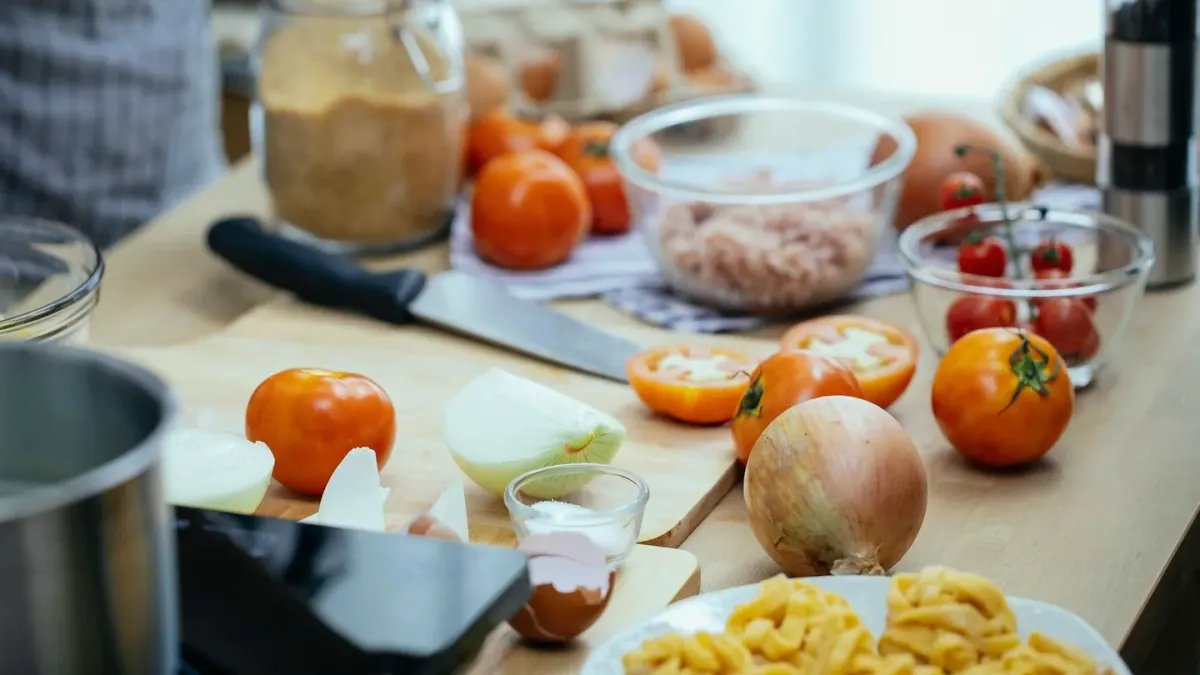
The scene is ordinary enough that I don’t need to invent much: a cutting board, a half an onion, a dog stationed at the cook’s heel hoping for a dropped scrap. Maybe a piece falls. Maybe the dog noses a bowl of French onion soup left too close to the counter’s edge, or gets the tail end of a burger with grilled onions before anyone notices. Nothing about the moment looks like an emergency. That’s exactly the problem I want to walk through here, because the biology behind onion toxicity in dogs runs on a delay switch, and delay is where good intentions go wrong.
The short answer, stated plainly and without hedging: yes, onions are toxic to dogs. Not just the raw bulb — cooked, dehydrated, powdered, and blended into broth, all of it carries the same risk, because the compound responsible for the damage isn’t destroyed by heat or drying. That compound is a thiosulfate, most notably N-propyl disulfide, and it does something specific and measurable to a dog’s red blood cells: it oxidizes hemoglobin until the cell can no longer protect itself, forming clumps called Heinz bodies that mark the cell for early destruction. According to the Merck Veterinary Manual, ingestion of Allium species — onion, garlic, leek, chive, shallot — can produce Heinz body hemolytic anemia in dogs, cats, and food-producing animals alike, whether the plant material is raw, cooked, or concentrated.

Why a Kitchen Vegetable Can Poison Blood
Dogs lack the enzymatic tools to neutralize thiosulfates the way humans do, which is the core reason a food that’s harmless on our plate becomes a hematologic problem on theirs. Once absorbed, the compound oxidizes hemoglobin inside the red cell. The cell membrane stiffens around the damaged protein, the spleen recognizes the cell as abnormal, and it gets pulled from circulation early. Do this to enough cells at once and you get hemolytic anemia — a genuine drop in the blood’s oxygen-carrying capacity, not a vague stomach upset. The PubMed-indexed study on experimental onion-induced hemolytic anemia in dogs found large numbers of Heinz bodies in circulating red cells within a day of a single oral dose of dehydrated onion, with the percentage of affected cells peaking around day three before declining. That lag is the whole reason this topic deserves more attention than it gets.
How Little It Takes, and Why Size Matters
Owners often ask for a number, and I understand the impulse — a number feels like control. The Merck Veterinary Manual notes that clinical signs in dogs have followed ingestion of roughly 15 to 30 grams of raw onion per kilogram of body weight, with garlic considered several times more potent gram for gram. I’ll give you that figure, but I won’t let it stand in as a safety line, because it describes where a research population started showing signs, not where any individual dog’s own chemistry, existing liver function, or blood reserve runs out. A ten-pound terrier with a scrap of onion ring and a seventy-pound retriever with the same scrap are not facing the same math, and a dog already living with anemia or liver disease has even less room to absorb the hit. This is diet risk the way I think about neurologic risk: the population-level threshold is a starting reference, never a personal guarantee.
A related point worth saying without dressing it up: this is one of the clearer places in canine nutrition where hedging serves nobody. Owners managing a food transition, a fiber-sensitive gut, or a senior dog’s shifting appetite already juggle enough nuance — see our guide on switching a senior dog to a new food or on how much fiber is too much for the kind of graduated, evidence-weighed advice that most diet questions deserve. Onion isn’t one of those questions. It’s closer to a bright line than a dial to adjust.
What Delayed Toxicity Actually Looks Like at Home
This is the part that catches owners off guard, and it’s worth sitting with as its own idea: a dog can look completely normal on the day of exposure. The ASPCA lists vomiting, hemolytic and Heinz body anemia, blood in the urine, weakness, elevated heart rate, and panting as the clinical picture, and the Merck Veterinary Manual is specific that acute hemolytic anemia — weakness, pallor, icterus, collapse — tends to develop several days after ingestion, not immediately. Practically, that means the dog who ate the onion scrap on Tuesday and seemed fine through Wednesday can still present with pale gums and lethargy by Friday.
I think often of a dog I’ll call, for the sake of the picture, an aging Labrador who’s slowed down enough that a little extra tiredness barely registers to the family around him. He noses a plate of grilled onions off the counter one evening while the kitchen is busy, eats maybe two tablespoons’ worth, and everyone laughs it off as classic Labrador behavior. Two days later he’s quieter on the walk, his gums look a shade lighter than usual, and his appetite dips. None of it screams emergency. That’s the trap. A senior dog’s baseline energy already dips and recovers for a dozen ordinary reasons, which is exactly why a delayed, oxidative process like this one hides so well inside a household that isn’t looking for it. The tradeoff an owner faces isn’t dramatic — it’s whether to treat a quiet week as background noise or as a signal worth a same-day call.
Where I Draw the Line as a Neurologist Who Also Practices TCVM
I reach for imaging when a nervous system problem needs a precise map, and I reach for an acupuncture needle when the map alone won’t restore function — different tools, same commitment to knowing exactly how something works before I trust it. Onion toxicity gets the same discipline from me, just applied to blood instead of nerve. The mechanism is documented, dose-dependent, and delayed. Given that, I don’t see room for a moderate position here the way there might be for, say, a fermented food or a fiber blend where the evidence supports a range of tolerances. My stance is straightforward avoidance, full stop, and I’d rather a client hear that plainly than receive a softened version that leaves room for the burger with grilled onions on top.
Where I do bring an integrative lens in is recovery, not prevention. A dog who’s had a hemolytic event, even a mild one caught early, benefits from a gut and appetite that bounce back cleanly — which is part of why I think about digestive resilience for aging dogs year-round, not just after a scare. If your household is also managing an older dog’s energy dips for unrelated reasons, our piece on NAD+ precursor chews for a dog whose energy dropped since turning eight covers what that category can and can’t reasonably promise, separate from any acute toxin exposure.
If It Happens Anyway
Call your veterinarian or an animal poison control line as soon as you know or strongly suspect ingestion — don’t wait for symptoms, because decontamination is most useful in the early hours, before hemolysis is underway. Bring an estimate of how much was eaten and in what form, since powdered or concentrated onion (bouillon, dehydrated soup mix) delivers more thiosulfate per bite than an equivalent volume of raw onion. Your vet may recommend inducing vomiting if the ingestion was recent, and will likely want a follow-up blood count in the days after, given how the Heinz body count and anemia can still be building after the dog looks outwardly fine. None of this requires panic. It requires taking the delay seriously, because that’s the one feature of this particular toxin that consistently fools attentive owners.
Frequently asked questions
How much onion is actually dangerous for a dog?
Merck Veterinary Manual cites clinical signs developing around 15–30 g of raw onion per kilogram of body weight, but that's a population average, not a personal safety line. Breed, existing blood or liver conditions, and even individual enzyme variation shift the real threshold, so smaller amounts can still matter for a small or vulnerable dog.
Does cooking or powdering onion make it safe?
No. The thiosulfate compounds responsible for the red blood cell damage survive cooking, dehydration, and powdering, which is why onion powder in broths, baby food, and seasoned leftovers is a genuine and often overlooked risk.
My dog ate onion and seems fine — should I still worry?
Yes. Heinz body formation on red cells begins within about a day, but the anemia it causes can take several days to produce visible weakness, pale gums, or dark urine, according to the Merck Veterinary Manual. A same-day call to your vet, rather than a wait-and-see approach, is the safer path.
Are garlic, leeks, and chives just as risky?
They belong to the same Allium family and share the mechanism, though the concentration of the toxic compound differs by plant, with garlic generally considered more potent per gram than onion. The safest working rule is to treat the whole family the same way: not for dogs.
Sources
- Garlic and Onion (Allium spp) Toxicosis in Animals — Merck Veterinary Manual
- Toxic and Non-Toxic Plants: Onion — ASPCA
- Experimental onion-induced hemolytic anemia in dogs — PubMed