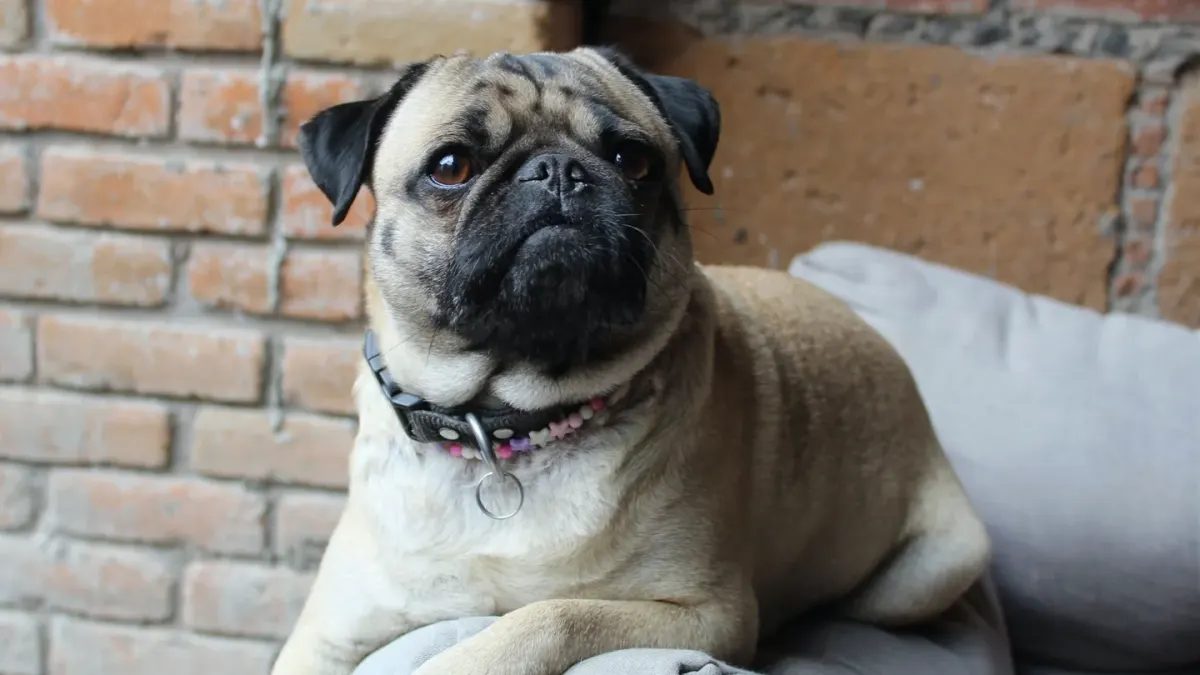
The kitchen light is still on at 10 p.m., and the dog — a 3-year-old, 58-pound Boxer mix — is doing laps around the coffee table instead of settling. His owner has tried a late walk, a stuffed Kong, dimming the lamps. Now she is holding a jar labeled calm with GABA and wondering whether one chew will flip the switch from wired to sleepy. It is a reasonable question, because GABA sits at the center of inhibitory signaling. The problem is that swallowing GABA is not the same as increasing GABAergic inhibition where sleep is organized.
Bedtime checklist I use before any GABA product:
- Rule out pain, late-day stimulants, and learned nighttime arousal first
- Treat oral GABA as unproven for crossing into normal sleep circuitry in dogs
- Prioritize sleep pressure: daytime activity, consistent lights-out, same bed place
- If using a chew, favor ingredients with clearer behavioral or human data over GABA dose alone
- Track one observable outcome for 10–14 nights before changing anything
- Stop and call your veterinarian for panting, pacing with vocalizing, or sudden behavior change
That list sounds plain, and that is deliberate. Supporting normal function is not treating neurologic disease, and bedtime restlessness is usually a systems issue rather than a single neurotransmitter deficiency.
Why oral GABA sounds logical and falls short
GABA is the principal inhibitory neurotransmitter in the mammalian brain. When GABA binds its receptors on a neuron, the pathway generally becomes less likely to fire. From mechanism alone, more inhibition should mean less arousal.
Oral supplementation breaks that chain. Dietary GABA must survive digestion, enter circulation, then cross the blood-brain barrier to reach sleep-regulating circuits. That barrier crossing is poorly supported in dogs, and there are no controlled canine bedtime trials showing that a GABA-labeled chew changes sleep latency or nighttime waking. Reason from mechanism and flag the overreach: a relevant pathway does not equal a delivered effect.
This is where I land as a neurologist. I do not reject GABA chemistry; I reject the leap from label to brain. The strongest counterargument is owner report — “he seemed calmer within an hour.” That observation can be real without proving GABA action, because chewing, routine, placebo-by-owner, and co-ingredients all shape behavior.
Two weeks in, that same Boxer mix illustrated the tradeoff. His owner gave the GABA chew at 9 p.m. for twelve nights and logged settle time on her phone. Night four looked better — lights out by 11 instead of midnight — but nights seven through ten slid back to pacing, mouthing the blanket, and barking at hallway noise. Nothing else had changed except a later dinner and a neighbor’s new puppy vocalizing through the wall. The chew had not hurt, but it had not created stable inhibition either, which forced a different conversation about routine and co-ingredients rather than a higher GABA dose.
What evening ingredients actually have behind them
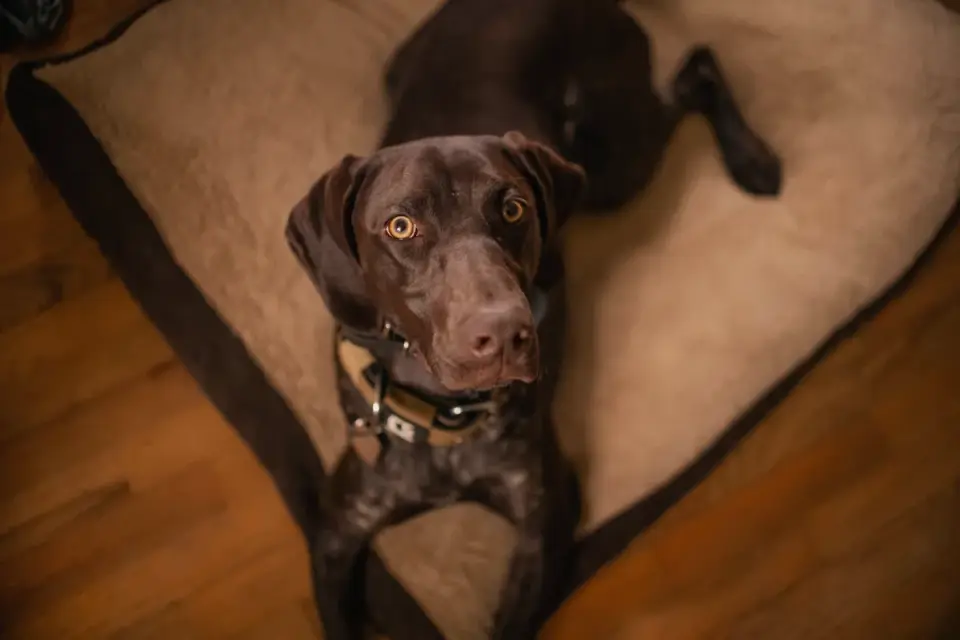
If a nighttime formula helps, credit usually belongs elsewhere in the label.
L-theanine is an amino acid found in tea that has been studied for its calming properties. That framing matters because the clearest dose-anchored signal remains human: Molecular Psychiatry noted “except for one study on psychotic anxiety (SMD = 0.54; 400 mg/day for 8 weeks)”, which does not translate into a canine bedtime dose. It tells us the mechanism is worth studying, not that a dog chew replicates that protocol.
For botanicals, the evidence boundary is narrower. Biomedicines summarized the non-human position plainly: “For the remaining species, evidence is derived mainly from preclinical studies or traditional use.” In other words, tradition can inform a low-risk trial for normal relaxation, but it cannot promise sleep onset.
Ashwagandha sits in a similar promising-but-bounded space. Cureus reported that “A systematic review analyzed multiple RCTs and concluded that ashwagandha has a moderate positive impact on stress reduction and cognitive performance.” Those were not hyperactive dogs at bedtime, so I treat KSM-66 and related extracts as stress-support ingredients rather than sedatives.
For context on how chews are evaluated overall, see Do Dog Calming Chews Actually Work? A Vet’s Read on the Evidence and L-Theanine vs Valerian Root for Anxious Dogs: What Actually Calms a Dog Down. For morning-after sleepiness versus true anxiety, Melatonin for Dogs: What the Hormone Actually Does, and Where the Evidence Stops helps separate circadian support from calming.
A 9-year-old, 22-pound Dachshund showed why ingredient context changes the plan. By day 10 of a theanine-plus-herb chew given with a fixed 10 p.m. lights-out, she stopped circling the bedroom door and stayed on her orthopedic bed until 5 a.m., up from 3 a.m. waking. The owner wanted to credit GABA because it was first on the front label. The back label told a fuller story: routine consistency, a smaller evening meal, and co-ingredients with more behavioral precedent. We kept the routine and held the product constant rather than chasing milligrams.
A bedtime protocol that respects the neurology
Start with sleep pressure and predictability. Most hyperactive evenings I see are under-exercised days plus overstimulating nights — fetch at 8 p.m., then wrestling, then a plea to settle.
A single short paragraph to hold onto: inhibition follows timing.
Feed dinner at the same hour, finish vigorous play at least two hours before bed, add a brief sniff walk or nosework, then move to the same bed in the same dim room. Offer a chew 30–60 minutes before lights-out if you and your veterinarian choose one, but judge it by a log: time to lie down, number of wake-ups, morning demeanor. If there is no change across 10–14 nights, the answer is not more GABA.
The edge case owners miss involves age and arousal type. A 6-year-old, 71-pound Labrador began standing by the bed at 1 a.m. three weeks in after a move, not barking, just awake and licking his paws. That pattern points less toward general hyperactivity and more toward anxiety, discomfort, or cognitive change, especially in a senior dog. In that setting a GABA-marketed chew is the wrong tool, and examination beats supplementation. Pain, lower urinary tract need, noise sensitivity, and early cognitive dysfunction all masquerade as bedtime energy.
Choose products like a skeptic. Look for a lot number, feeding directions by weight, a NASC or third-party quality signal, and no disease or sedation promises. Avoid stacking multiple calming products to force drowsiness. If your dog takes behavior medication, ask your veterinarian before adding anything marketed for calm, because even structure-function ingredients can complicate monitoring.
GABA will keep selling at bedtime because the story is tidy. Sleep is not tidy. Support the circuit — light, activity, timing, and a modest, well-made chew if appropriate — and let the log decide.
Frequently asked questions
Will a GABA chew make my hyperactive dog sleepy at bedtime?
There is no controlled canine evidence that oral GABA reliably causes sleepiness. A consistent routine plus a chew with better-studied calming ingredients is a more defensible trial, tracked over 10–14 nights.
When should I skip supplements and call my vet?
Call promptly for new nighttime panting, pacing with whining, house-soiling, limping, or sudden personality change, especially in seniors. Those signs suggest pain, anxiety, or medical disease rather than simple hyperactivity.