Can My Dog Have My Own Turmeric Capsules Instead of a Joint Chew?
Medically reviewed by Johnny Slaughter, DVM, CVA, CVFT — For general education — not a substitute for veterinary care.
The capsule in your medicine drawer was dosed for a 150-pound human liver, not a 40-pound dog's joint, and that gap is the whole story.
| Product | Score | Key details | Best for | Pros & cons |
|---|---|---|---|---|
| Boops Pets Advanced Hip & Joint Boops Pets | — | — | — | — |
| Human turmeric capsule (repurposed) Various human-supplement brands | — | — | — | — |
I still remember the exam room with a twelve-year-old beagle named Otis and his owner, a retired schoolteacher who’d read that turmeric was “basically a natural anti-inflammatory.” She had a bottle of 500 mg turmeric capsules on her kitchen counter, the same ones she took for her own knees, and she’d been splitting one open into Otis’s dinner every night for about three weeks. Otis had gone from stiff-legged and food-motivated to stiff-legged and refusing breakfast. Nothing dramatic, nothing an ER visit would catch — just a dog whose stool had gone soft and whose appetite had quietly dropped off. When we worked backward through what changed, the turmeric capsule was the only new variable. It was not tragic, but it was avoidable, and it is the exact scenario that keeps this question in my inbox: can a dog just have what’s already in the cabinet?
Here’s where I land, and I will not bury it: a human turmeric capsule is not a substitute for a joint chew built for a dog’s body weight, gut, and ingredient stack. Turmeric itself is not the villain — curcumin, its active compound, has real supporting research — but the capsule format, the dose, and the co-ingredients (often black pepper extract, sometimes fillers not meant for canine digestion) were never designed around a 20-, 40-, or 70-pound dog. A joint chew built for dogs, with glucosamine, chondroitin, and green-lipped mussel dosed to body weight, is the more defensible daily choice. I’ll explain the mechanism, name the strongest counterargument, and tell you where I’d push back on myself.
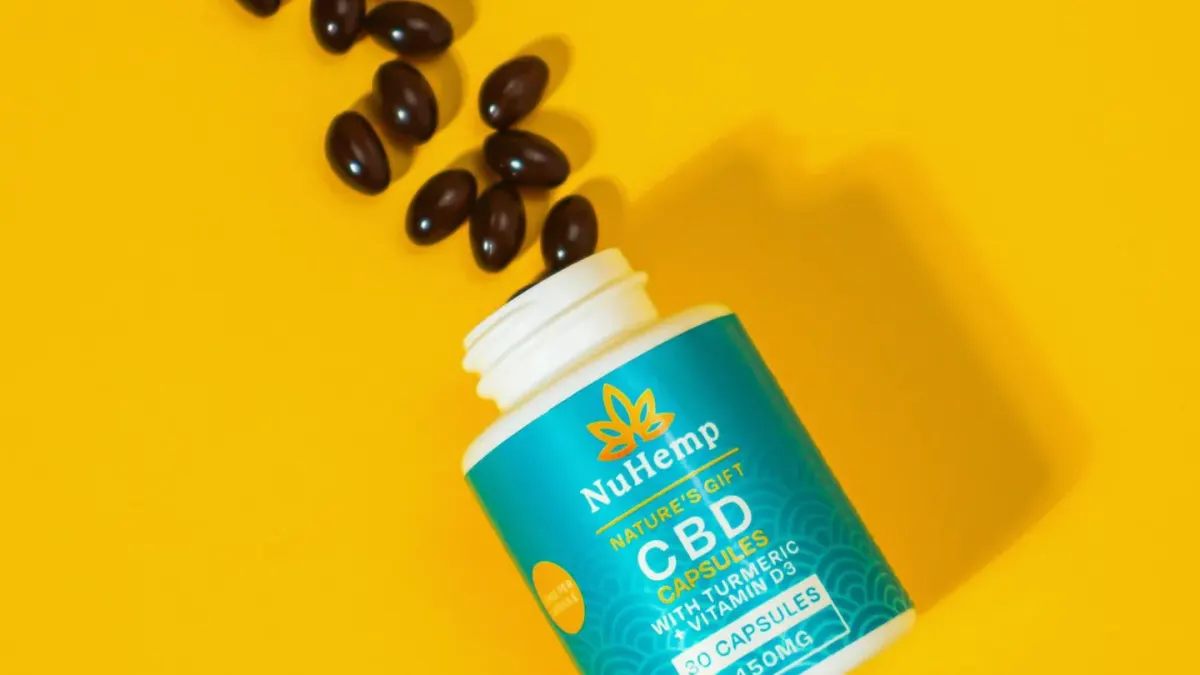
Start with what’s actually in that capsule. Most human turmeric supplements are turmeric root extract standardized to a curcumin percentage, frequently paired with black pepper extract (piperine) to improve absorption. That pairing is deliberate — curcumin on its own is poorly absorbed, and piperine can meaningfully change how much of it reaches circulation. For a dog, piperine is not automatically dangerous in trace amounts, but it is also not dosed with a dog’s smaller body mass or different metabolism in mind, and stacking it on top of a joint chew or other supplements risks doubling up without anyone tracking the total.
Dosing is the second problem, and it’s the one owners underestimate most. A capsule made for a 150-pound adult assumes a certain body weight, liver capacity, and gut transit time. Hand that same capsule to a 25-pound terrier and you’ve effectively multiplied the relative dose several times over. Turmeric has mild anticoagulant properties, and at high enough doses it can cause gastrointestinal upset — loose stool, reduced appetite, occasional vomiting — which is precisely what Otis experienced. None of that means turmeric is off the table for dogs; it means the human-dosed capsule format is the wrong delivery vehicle.
Contrast that with what a canine-specific joint chew is built to do. Boops Pets Advanced Hip & Joint is formulated as an air-dried soft chew with a defined per-serving stack: glucosamine HCl, MSM, chondroitin, green-lipped mussel powder, vitamin C, pumpkin fruit powder, and hyaluronic acid, each dosed for dogs rather than adapted from a human product. Glucosamine and chondroitin remain among the most studied joint-support ingredients for dogs, and a review published in the Journal of Veterinary Medical Science found glucosamine HCl can help prevent experimentally induced cartilage degradation in vitro — mechanistic evidence, not a cure claim, but a real signal for what the ingredient is doing at the joint. Chondroitin, separately, has been shown in Frontiers in Veterinary Science to support healthy synovial fluid homeostasis, which matters because synovial fluid is what keeps a joint gliding rather than grinding.
Green-lipped mussel is the ingredient I get the most questions about, because it sounds unusual next to glucosamine and chondroitin. It contains omega-3 fatty acids and glycosaminoglycans that have been studied for joint support, and a study published in Nutrients found mussel extract compounds reduced paw swelling and lowered inflammatory markers in an animal model — early-stage evidence, not a green light to promise a cure, but a legitimate reason it’s in the formula rather than a marketing flourish. That’s the honest, structure-and-function framing I’d want on any label before I recommend it to a client.
I want to name the strongest counterargument fairly, because a food-first clinician doesn’t get to skip the case against their own position. Turmeric root itself, used in small, food-safe amounts — a pinch mixed into a home-cooked meal, or a vet-formulated golden paste at a conservative dose — has a longer history of use in integrative and holistic practice than most synthetic joint actives, and some owners genuinely prefer that whole-food approach. I don’t dismiss it. If an owner wants to explore turmeric as part of a broader food-therapy plan, my answer isn’t “never” — it’s “not the human capsule, and not without your vet weighing in on dose and any interaction with blood thinners or upcoming surgery.” That’s a meaningfully different recommendation than pulling a bottle off your own nightstand.
One case that has stuck with me for years involved a ten-year-old Labrador named Duchess, about 68 pounds, whose owner worked nights and noticed the change mostly in the dark kitchen at 2 a.m. — Duchess used to trot straight to her water bowl after a bathroom break, and over about two months she’d started pausing at the top of the two steps down from the deck, weight-shifting before committing to the descent. The owner’s first instinct, like Otis’s owner, was to reach for her own supplement drawer. We talked through the same reasoning I’m laying out here: not because turmeric is unsafe in principle, but because a capsule dosed for her own body weight wasn’t going to translate cleanly to a 68-pound dog’s joints, and there was no way to know how much curcumin or piperine Duchess was actually absorbing versus passing through. We moved her onto a dog-specific joint chew with glucosamine and chondroitin at a labeled canine dose, alongside a stricter weight-management plan, since excess weight loads the joint more than almost any supplement can offset. Within six to eight weeks, the owner reported Duchess was back to trotting to the water bowl without the pause at the steps — one owner’s account, not a clinical outcome, but it’s the kind of change that made the reasoning feel worth repeating to the next client.
For context on how a dog-specific formula compares against the broader field, our guide to dog hip and joint supplements breaks down the criteria worth checking on any label, and our deeper look at glucosamine for a dog struggling with stairs at night covers what the ingredient does and doesn’t do on its own. If hyaluronic acid is the ingredient you’re most curious about, we’ve also examined whether hyaluronic acid actually works for dog joints in more depth.
Sourcing matters here too, separate from the ingredient science. Boops Pets is listed as a National Animal Supplement Council Primary Supplier, and the NASC has independently audited the facility and its quality processes — that’s a manufacturing and quality-control credential, not a guarantee of clinical outcomes, and it’s worth knowing the difference. It’s a reasonable proxy for consistency, though, which matters more than people think when you’re feeding the same chew every day for months.
Where would I push back on myself? If cost is the real constraint — and for a lot of owners it is — a small, food-safe amount of plain turmeric stirred into a home-cooked meal is genuinely cheaper than a dedicated joint chew, and it’s not an unreasonable starting point if your vet signs off on the amount. What I won’t do is tell an owner to reach for the same capsule they take for their own joints and assume the dosing math works out. A PMC (National Library of Medicine): toxicity evaluation of turmeric formulations found that adverse effects tend to track with dose and formulation rather than turmeric use in general — which is exactly the point. Format and dose are the variables that make or break safety, and a human capsule was never calibrated for either.
Bottom line: skip the human turmeric capsule for a dog’s joints — the dose and co-ingredients weren’t built for a canine body — and reach for a chew formulated and dosed specifically for dogs instead; if you want turmeric in the mix at all, do it as a small food-safe addition with your vet’s input, not as a repurposed human supplement.
Frequently asked questions
Is a small amount of turmeric ever okay for a dog?
A small, food-safe amount mixed into a meal can be reasonable for some dogs, but the dose should come from your veterinarian, not from a human capsule sized for an adult person.
Why does the black pepper in turmeric capsules matter for dogs?
Black pepper extract (piperine) is added to human turmeric capsules to boost curcumin absorption, but it wasn't dosed with a dog's smaller body weight in mind, and stacking it with other supplements can push the total dose higher than intended.
What should I check on a dog joint chew label instead?
Look for a defined per-serving dose of ingredients like glucosamine, chondroitin, MSM, or green-lipped mussel, plus a manufacturing credential such as NASC membership.
Sources
- Chondroitin sulfate and synovial fluid homeostasis — Frontiers in Veterinary Science
- Glucosamine HCl and cartilage degradation, a review — Journal of Veterinary Medical Science
- Green-lipped mussel compounds and inflammatory markers — Nutrients
- Boops Pets NASC Primary Supplier listing — NASC
- Safety Evaluation of Oleoresin-Based Turmeric Formulation: Assessment of Genotoxicity and Acute and Subchronic Oral Toxicity — PMC (National Library of Medicine)