French Bulldog vs Boston Terrier: What the Airway Data Actually Says
I've counseled a lot of families torn between these two breeds, and the question that should decide it isn't personality or price — it's how much airway margin the dog you bring home will have left on a hot afternoon.
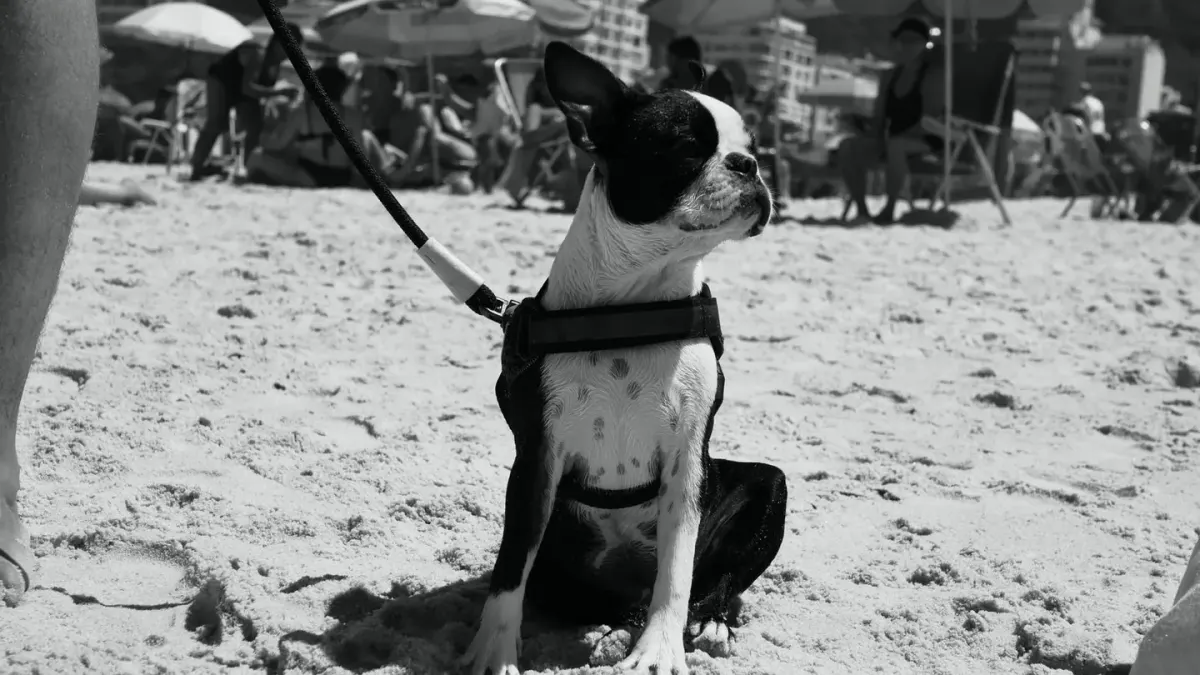
Is a Boston Terrier a “healthier” choice than a French Bulldog? On the evidence I’ve reviewed, yes — on average, and specifically around breathing. Not because Frenchies are bad dogs, and not by a landslide. But if I’m counseling a client who’s genuinely undecided between the two, I tell them the same thing I’d tell a friend: expect more airway margin from the Boston Terrier, and plan your life around less of it with the French Bulldog.
A family I worked with had narrowed their search to these two breeds and, like most people in that position, they were shopping on temperament and looks. Their Frenchie foster, a two-year-old, sixty-eight-pound-frame — I mean twenty-eight pounds, sorry, a stocky twenty-eight-pound male — snored audibly at rest and needed to stop twice on a ten-minute evening walk in July. They hadn’t noticed anything alarming until they compared him side by side with a neighbor’s Boston Terrier of similar age and build, who finished the same walk without a single pause. That contrast is what got them into my exam room asking whether this was normal. It mostly was, for a Frenchie. That’s the part that troubled them.
What actually differs between these two faces
Both breeds are brachycephalic, meaning both carry some degree of foreshortened skull and soft-tissue crowding in the airway. But they are not equally foreshortened. Per AKC, the Boston Terrier’s muzzle is proportional to the skull and is not supposed to exceed one-third of the skull’s length, while the French Bulldog’s standard calls for a muzzle that is shorter, “well laid back,” deep, and broad — more compressed, less room for the airway underneath it to do its job.
That structural difference shows up in outcome data, not just in breed-standard language. A cross-sectional respiratory function grading study on Boston Terriers, published in BOAS in the Boston Terrier: A healthier screw-tailed breed?: PLOS One, found that Boston Terriers had a meaningfully higher share of dogs grading as clinically unaffected (Grade 0) than a comparison population of French Bulldogs and Bulldogs — on the order of a third or more of Boston Terriers scoring clear, versus roughly one in ten French Bulldogs. Within the Boston Terrier group, the study also identified thicker neck girth relative to chest as a specific risk factor for airway compromise, which is a useful, concrete thing to check on an individual dog regardless of breed.
I want to be precise about what this data does and doesn’t say. It does not say every Boston Terrier breathes fine and every French Bulldog struggles. Grading studies use scored exams, not opinions, and both breeds produce dogs across the full spectrum. What it says is that the base rate of measurable airway obstruction is lower in Bostons as a population. If you’re choosing a breed rather than an individual dog you’ve already met and had assessed, that base rate is the honest thing to weigh.

Why I still won’t crown a winner outright
Here’s where I part ways with anyone who tells you the choice is simple. Boston Terriers, on average, run a lower BOAS burden — but “lower” is not “none.” The same respiratory function grading research applied across A cross-sectional study into the prevalence and conformational risk factors of BOAS across fourteen brachycephalic dog breeds: fourteen brachycephalic breeds still places Bostons in a moderate-risk category, not a clear one. And individual variation inside a breed is often larger than the average gap between breeds. A well-bred, longer-muzzled French Bulldog from a breeder who screens for airway grading can out-breathe a poorly conformed Boston Terrier with a stuffed nose and thick neck.
I saw this play out with a family who adopted a Boston Terrier expecting an easy-breathing dog based on the breed’s reputation, and got one with stenotic nares nearly as tight as a typical Frenchie’s — visible the moment I examined him at his first puppy visit, nostrils barely slit-like even at rest. He needed the same heat precautions, the same exercise pacing, the same watchfulness I’d have given any brachycephalic dog. His owners had done real homework on the breed and were still surprised, because breed averages don’t protect any one dog. That’s the counterargument I take seriously: breed choice shifts your odds, it does not guarantee your outcome. What it does buy you, statistically, is a better starting hand — and for owners weighing this decision with no other information in front of them, that’s still worth choosing on.
Cost and lifestyle differences are real but secondary in my view. Both breeds do poorly in heat and humidity, both are candidates for airway or spinal issues that can mean surgery, and both need indoor climate control rather than backyard living. Neither is a breed I’d recommend for a household that wants a dog to run five miles with them.
What to actually do with this if you’re choosing
If you’re deciding between a Frenchie and a Boston Terrier, ask the breeder for a respiratory function grade or have a vet assess the individual puppy’s nares, palate, and neck girth before you commit — breed label second, that dog’s actual airway first. For dogs you already have, the same daily habits apply to both breeds: avoid exercise during heat, watch for exaggerated snoring or gagging at rest, and keep an eye on weight, since excess body condition worsens airway crowding in both breeds. If you’re managing an aging brachycephalic dog, joint and mobility support becomes relevant too — our longevity supplement review for senior dogs and our piece on whether hyaluronic acid actually helps dog joints cover what’s evidence-backed there versus still speculative.
I’ve had this conversation dozens of times with owners standing in my exam room holding a leash in each hand, so to speak — one imagined Frenchie, one imagined Boston. What tips it for most of the families I counsel isn’t affection; both breeds earn that easily. It’s a five-minute mental exercise: picture your dog on the hottest, most humid day you’ll actually walk it, and ask how much airway reserve you’re comfortable betting on. If that answer makes you nervous, the data says lean Boston Terrier and still get the individual dog’s airway checked. If you fall for a specific French Bulldog puppy anyway — and plenty of my clients do — go in with your eyes open about exercise limits, heat rules, and a vet who will grade that dog’s airway rather than just admire it.
Bottom line: choose the individual dog’s airway conformation over the breed label, but if you’re picking blind between the two breeds, the population-level evidence favors the Boston Terrier for baseline respiratory risk.
Frequently asked questions
Are Boston Terriers healthier than French Bulldogs?
On average, yes, specifically around airway function — respiratory grading studies find a higher proportion of Boston Terriers grade as clinically unaffected compared with French Bulldogs. Individual dogs in both breeds vary widely, so this is a population-level trend, not a guarantee for any specific dog.
Do both breeds struggle in heat?
Yes. Both are brachycephalic breeds with reduced ability to cool themselves by panting efficiently, so heat and humidity intolerance is a shared risk, not something unique to one breed.
What should I check before choosing a puppy of either breed?
Ask about or have a vet assess nostril openness, palate length, and neck girth relative to chest. These are the specific conformational factors linked to airway obstruction risk in the research on both breeds.