Can Dogs Eat Avocado Safely? What the Fat, the Pit, and Persin Actually Do
Medically reviewed by Justin Shmalberg, DVM, CVA, ACVN, ACVSMR — For general education — not a substitute for veterinary care.
The honest answer is that a spoonful of plain avocado flesh is a minor event for most dogs, while the pit sitting next to it is the part that actually sends dogs into surgery.
On this page
A client once described the moment her Lab mix, Miso, jumped the kitchen counter for a whole avocado left out for guacamole night. She didn’t see it happen — she found the peel on the floor and the pit missing entirely. What followed was two hours of watching the dog pace, refuse water, then finally vomit up a slick, intact pit the size of a golf ball. No surgery, this time. But she called me sounding rattled, asking the question every dog owner eventually asks at 9 p.m. with a search bar open: can dogs even eat avocado, or is this whole fruit just off the list?
My answer, and it’s a decisive one, is that avocado deserves a nuanced verdict rather than a blanket ban. Plain, ripe, pitted flesh in small amounts is a genuinely low-risk food for most healthy adult dogs. Everything else about the plant — the pit, the skin, the leaves, and unrestrained quantities of the fat-dense flesh itself — deserves real caution. Treating avocado as uniformly toxic misses where the actual danger sits, and treating it as a harmless snack ignores a documented cause of surgical emergencies.
What Persin Actually Does, and Doesn’t Do, in a Dog
Avocado contains persin, a fungicidal compound the plant produces naturally, and it’s genuinely dangerous to some species. Merck Veterinary Manual documents persin toxicosis producing serious cardiac and mammary-tissue effects in birds, horses, and other livestock, and the compound is concentrated most heavily in the leaves, bark, and pit rather than the ripe fruit pulp. Dogs sit in a different category. Clinical experience, toxicology consensus, and major veterinary sources including the American Kennel Club all describe dogs as considerably less sensitive to persin than birds or grazing animals — the fruit’s flesh generally produces, at most, self-limiting vomiting or diarrhea rather than the cardiotoxicity seen elsewhere. That’s a meaningfully different risk profile, and it’s worth saying plainly instead of hedging.
The Pit Is the Part That Actually Hurts Dogs
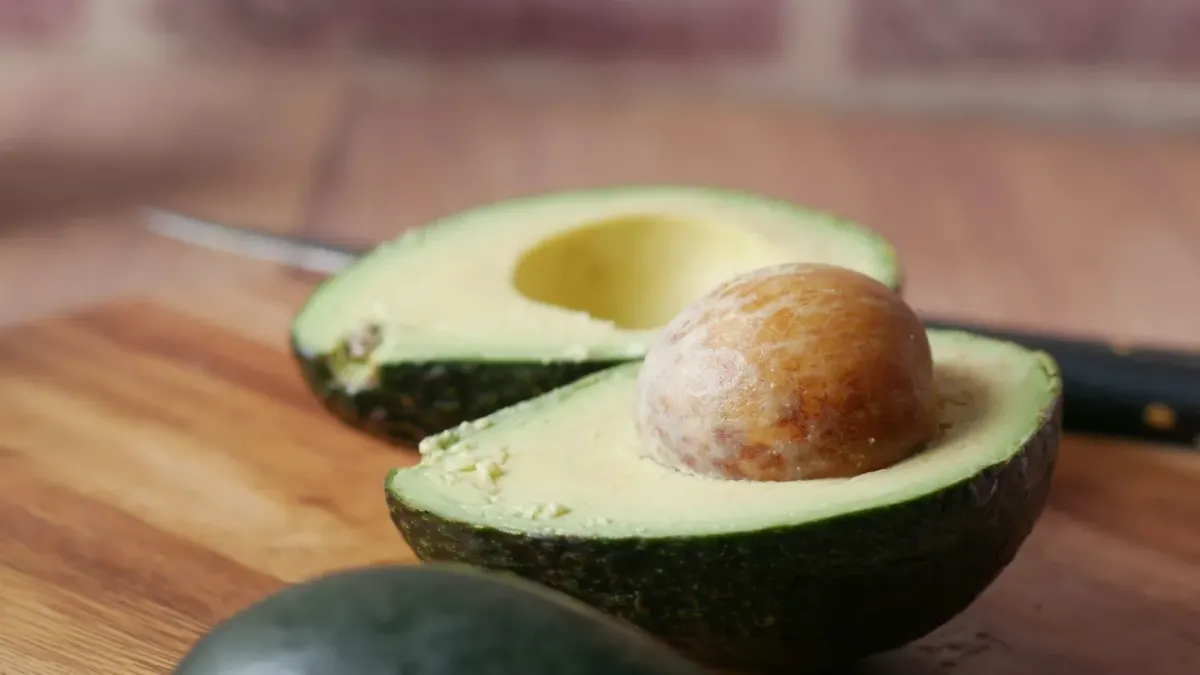
Here’s where I get specific instead of vague: the persin story is not the reason avocado shows up in emergency rooms. The pit is. It’s smooth, dense, roughly golf-ball sized in a standard Hass avocado, and shaped in exactly the wrong way to pass through a dog’s intestinal tract once swallowed whole or in large fragments. ASPCA flags avocado pits, skin, and leaves as the parts to keep away from pets, and that guidance tracks with what shows up on surgery tables — a lodged pit is a mechanical obstruction problem, not a toxin problem, and mechanical obstructions don’t resolve with monitoring. They resolve with imaging, and sometimes with a scalpel.

How Much Flesh Is Reasonable, in Practice
If you want to offer avocado at all, keep it simple and small. Peel it completely, remove the pit before your dog is anywhere near the kitchen, and offer a teaspoon or two of plain flesh for a medium dog — never guacamole, which typically carries onion, garlic, and salt, all separate hazards. Skip it entirely for dogs with a history of pancreatitis or any dog currently on a fat-restricted diet, since the fat content of avocado flesh is genuinely higher than most fruits dogs are offered, and repeated high-fat treats are a documented trigger for pancreatic flare-ups regardless of persin. If your dog is mid-transition onto a new food already, this isn’t the week to add a novel ingredient on top of it — our step-by-step guide to switching a senior dog’s food covers why sequencing dietary changes matters for a sensitive gut.
A second scene sticks with me because it went the boring, uneventful way most avocado exposures actually do. An older client’s terrier mix, a scrappy 14-year-old named Gus, snagged a single bite of avocado toast off a coffee table while his owner refilled her mug. No pit, no skin, just a smear of mashed flesh. She called anyway, understandably anxious given everything she’d read online about toxicity. I told her to watch for loose stool over the next 24 hours and otherwise carry on. Nothing happened. That’s the far more common outcome, and it’s worth saying out loud so owners aren’t panicking over a nibble while missing the pit sitting in the trash.
Avocado Oil Is a Genuinely Different Question
Avocado oil, pressed from the flesh and used in some commercial dog foods and treats, is not the same exposure as whole fruit. The oil-extraction process leaves persin behind in the pulp solids, and the amounts used in formulated pet food are small to begin with. That’s a separate, generally low-concern ingredient decision, not a reason to loosen the rules around whole avocado at home.
If GI Upset Follows Exposure
Mild vomiting or loose stool after a small avocado exposure often resolves on its own within a day. If loose stool persists, some owners lean on fiber to firm things up — though more isn’t automatically better, and our piece on how much fiber is too much for a dog is worth a read before reaching for a supplement. What should never wait is repeated vomiting, an unaccounted-for pit, abdominal pain, or a dog who stops eating — those are same-day-call signs, not watch-and-wait signs, per guidance from the Pet Poison Helpline.
The evidence-bounded position I land on, and the one I’d defend against the blanket-ban camp: avocado flesh, in small plain amounts, is not the emergency the internet makes it out to be for most dogs. The pit is. Keep the fruit whole and out of reach, offer the flesh sparingly if at all, and treat any missing pit as a reason to call your vet rather than a reason to wait it out.
Frequently asked questions
Is a small bite of avocado an emergency?
Usually not. A dog that licks guacamole or eats a bite of plain avocado flesh typically experiences, at worst, mild GI upset. Call your vet if you're unsure whether a pit was involved, since that changes the calculus entirely.
Can dogs eat avocado oil in dog food?
Commercial avocado oil is pressed from the flesh and processed in a way that removes most of the persin, so it's generally treated as a non-issue in the small amounts used in pet food formulation. That's a different question from feeding whole avocado.
What if my dog swallowed the whole pit?
Treat it as a possible obstruction until proven otherwise. Call your veterinarian or an emergency clinic, especially if your dog starts vomiting repeatedly, stops eating, or seems painful in the abdomen.
Are some breeds more at risk than others?
Dogs with a history of pancreatitis, small-breed dogs prone to narrow GI tracts, and dogs that gulp food without chewing are at higher relative risk — the first from the fat load, the second two from the pit.
Sources
- The Scoop on Avocado and Your Pets — ASPCA
- Avocado (Persea spp) Toxicosis in Animals — Merck Veterinary Manual
- Can Dogs Eat Avocado? — American Kennel Club
- Avocado Is Toxic To Dogs — Pet Poison Helpline