Can Dogs Eat Apples? A Neurologist's Take on Fiber, Seeds, and Aging Guts
Medically reviewed by Roger Clemmons, DVM, PhD, DACVIM (Neurology and Neurosurgery), CVA, CVFT — For general education — not a substitute for veterinary care.
Yes, dogs can eat apples, and for most gray-muzzled dogs the fiber and antioxidants are worth the trouble of coring them first.
On this page
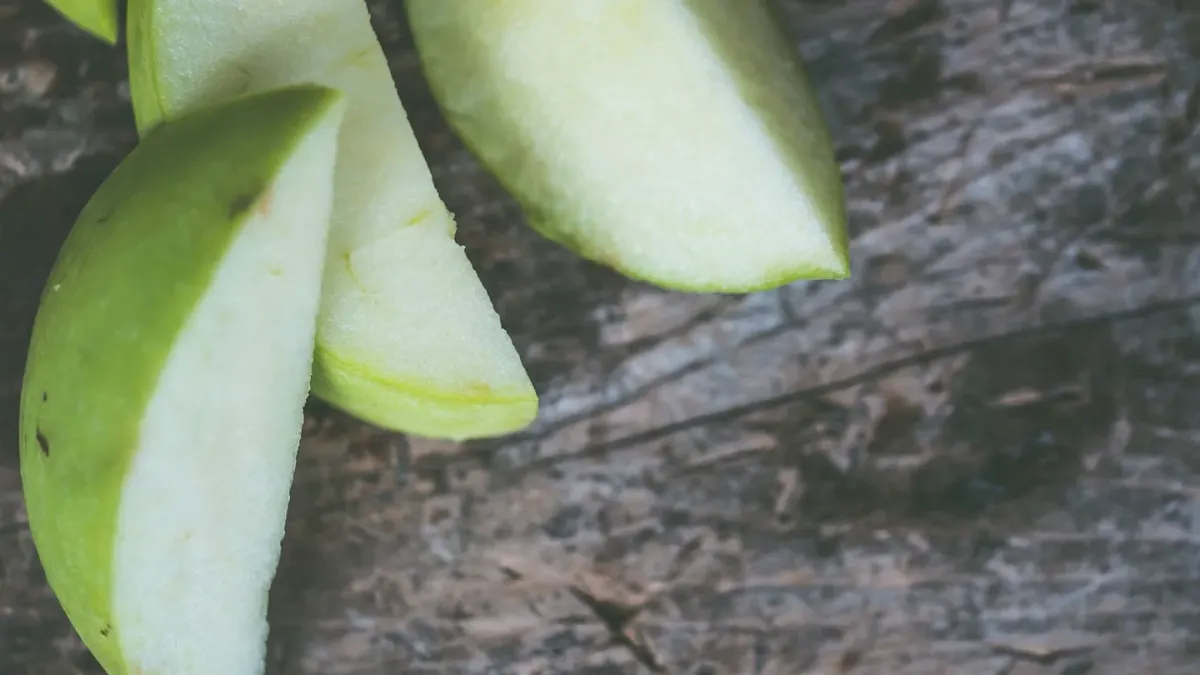
The apple had already gone soft on one side, the kind you’d normally toss, and the dog under the table knew it before the peel hit the cutting board. She was eleven, a spayed shepherd mix with a gray muzzle and a hip that clicked on cold mornings, and she’d worked out years ago that kitchen sounds meant negotiation was possible. Her owner cored the apple, cut it into thin half-moons, and set two on the floor. No core, no seeds, no stem. The dog ate them the way she ate everything now, deliberately, and went back to her bed by the radiator. It’s a small scene, but it’s the one that plays out in exam rooms as a question almost every week: can she really have this?
The verdict, stated plainly, is yes for most dogs. Apple flesh, with the core and seeds removed, is a reasonable low-calorie treat that happens to carry real nutritional weight for an aging gut. What earns that recommendation is worth walking through, because the reasoning matters more than the yes.
What Pectin Actually Does Downstream
Apples are, per the American Kennel Club, “chock full of fiber, especially in the peels,” and that fiber is mostly pectin, a soluble type that dissolves into a gel in the gut and slows transit time. In a younger dog that mostly means firmer stool and a bit of satiety. In an older dog, where motility slows and the microbiome has less resilience to begin with, that same slowing effect can matter more, feeding fermentation by resident bacteria rather than passing through unused. I think of it in the same frame I use for TCVM food therapy, where apple is considered a cooling, moistening food that supports digestion rather than a cure for anything. The Western mechanism and the older food-energetics framework are describing the same behavior from two directions, and I’d rather use both lenses than pick one.
The AKC also credits apples as a source of vitamin C, vitamin A, potassium, and antioxidants, alongside a precise number worth remembering: about 19 grams of sugar per medium apple. That sugar is the actual tradeoff, more than the fiber is the actual benefit, for dogs who are diabetic, insulin-resistant, or simply carrying more weight than their joints appreciate. For those dogs I’d rather source fiber from something with less sugar attached and save apple for the occasional, cleared-by-your-vet slice.

The Seed Question, Mechanism Over Myth
Apple seeds contain amygdalin, a compound that can release hydrogen cyanide, but only once it’s broken open and metabolized in meaningful quantity. A dog crunching down a mouthful of seeds is a different animal than a dog swallowing the one or two seeds that fall out of a carelessly cut slice. The chemistry is real. The practical risk, for the amount most dogs actually encounter, is small. I still core every apple before it reaches a patient’s owner, not because I’m worried about the math, but because habit is cheaper than a phone call to poison control at 11 p.m. The core itself is the bigger threat in my exam room experience, a dense, irregular chunk that can lodge going down rather than anything it contains chemically.
A client brought in a young Lab mix a few winters back, not for apple seeds but for the core itself, swallowed whole off a counter while nobody was looking. The imaging told the story faster than the exam did, a firm, air-outlined mass sitting where it shouldn’t in the mid-esophagus. It came up with sedation and patience rather than surgery, and the dog went home that evening with a sore throat and a very attentive owner. I bring that scene up not because apples are dangerous, but because the actual failure mode with apple is mechanical far more often than it’s toxic, and that’s the piece owners tend to miss while they’re busy worrying about seeds.
Where the Evidence Gets Thin
Fiber’s promise for gut health is easier to state than to prove case by case. A recent Frontiers in Veterinary Science study on probiotic response in dogs found that “diversity metrics did not distinguish non-responders from responders,” which is a useful, humbling data point. It means we can’t yet predict from a stool sample alone which dog’s microbiome will actually shift in response to a dietary fiber source like apple pectin, and which one won’t budge. That gap matters for owners hoping a slice of apple a day will visibly change their dog’s digestion. It might. It might not. Individual variation is the honest answer, and I’d rather say that than promise a result the evidence doesn’t back yet. If you’re building out a fiber routine more broadly, our piece on how much fiber is too much for a dog covers the ceiling side of that question.
Dogs with exocrine pancreatic insufficiency need a different conversation entirely. Per a JAVMA review, Journal of the American Veterinary Medical Association: EPI is treated by pancreatic enzyme replacement therapy, nutritional management with low-residue diets of moderate fat content, and cobalamin supplementation. Apple’s fiber load doesn’t fit neatly into a low-residue plan, so I’d rather these dogs get their treats elsewhere. The same review also notes that future studies are needed to understand why dysbiosis persists in some EPI dogs even after enzyme therapy starts, which tells you the gut-fiber relationship in compromised dogs is still an open question, not a settled one.
How I’d Actually Serve It
For a healthy dog, cored and seeded apple slices in modest amounts, a few pieces a few times a week, sit comfortably alongside the rest of a balanced diet. For a senior dog already on a fiber or gut-support routine, treat apple as an addition to track rather than a free pass, since stacking fiber sources can tip a sensitive gut the wrong direction faster than it helps. If your dog is already transitioning between foods for age-related reasons, our guide on switching a senior dog to a new food is a useful companion piece, and if fiber and gut support are part of a broader longevity plan, it’s worth reading how that fits alongside things like NAD+ precursor chews or probiotic chews priced per serving, since none of these tools work in isolation.
Apple is not a supplement, and it won’t reverse anything about an aging gut on its own. It’s a reasonably well-evidenced, low-cost source of fiber and antioxidants that most dogs tolerate well once you’ve done the boring work of coring it. That’s the whole case, stated without the seed-panic or the miracle-fruit framing either one tends to invite.
The short version: core it, seed it, skip it for dogs with diabetes or EPI unless your vet says otherwise, and don’t expect it to do more than it’s built to do.
Frequently asked questions
How many apple seeds are actually dangerous to a dog?
The amygdalin locked inside apple seeds only becomes a cyanide risk if the seeds are chewed and broken open in meaningful quantity. A dog swallowing a stray seed or two from a dropped slice is not a poisoning event, but I still core apples out of habit rather than run the math every time.
Are apple cores unsafe for dogs?
The bigger issue with a whole core is mechanical, not chemical. It's dense, oddly shaped, and can lodge in the esophagus or lower down, especially in small or brachycephalic dogs. I treat the core as a choking hazard first and a seed-cyanide question a distant second.
Can diabetic or overweight dogs have apple?
In small amounts, maybe, but the sugar load (around 19 grams per medium apple, per the American Kennel Club) matters more for these dogs than for a lean, otherwise healthy one. I'd rather a diabetic patient get their fiber from a lower-sugar source and save apple for occasional, vet-cleared use.
What about applesauce or dried apple chips?
Store-bought applesauce and dried apple products often carry added sugar or, less commonly, xylitol in sugar-free versions, which is a genuine emergency. Plain, fresh apple flesh is the safer default. Read labels before assuming a processed apple product is equivalent to the fruit.
Is apple fiber the same thing as a fiber supplement?
No. Apple pectin is one soluble fiber among many, and it behaves differently than the psyllium or beet pulp used in commercial fiber supplements. If a dog is already getting supplemental fiber, stacking apple on top can tip a sensitive gut toward loose stool rather than support it.
Sources
- Can Dogs Eat Apples? How to Safely Feed Apples to Dogs — American Kennel Club
- Exocrine pancreatic insufficiency in dogs and cats — Journal of the American Veterinary Medical Association
- Probiotic response variability in dogs — Frontiers in Veterinary Science